
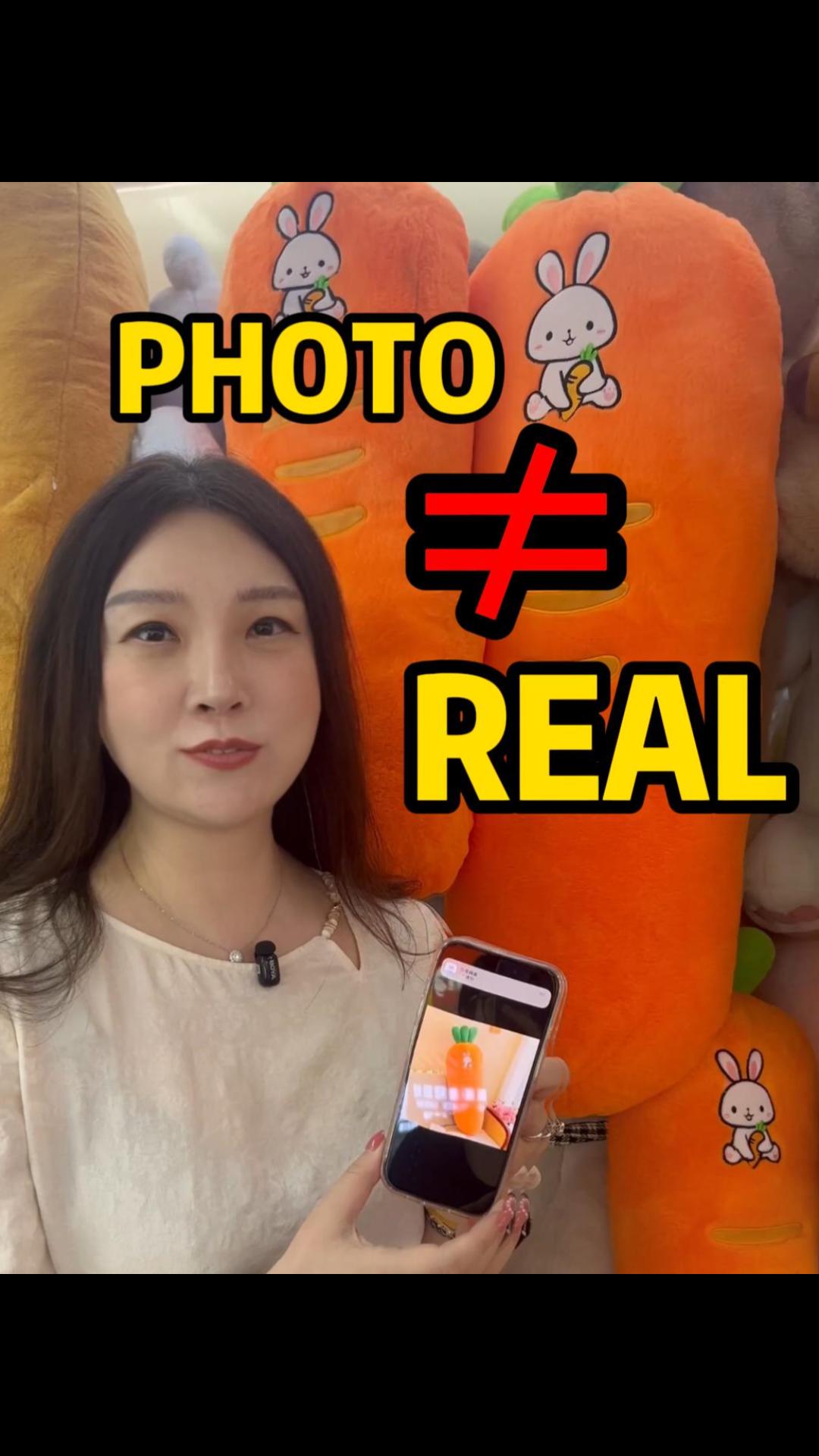
Two products can look almost identical in a photo.
But once you hold them in your hands, the differences may become obvious.
The material may feel different. One product may be heavier, softer, firmer, larger, or better finished than the other. Small details that are difficult to see on a screen can affect product quality, customer experience, shipping costs, and selling price.
That is why professional buyers should not approve a bulk order based only on product photos.
Before committing to a large quantity, a physical sample can help buyers understand what they are actually purchasing.
What Can a Product Photo Show?
Product photos are useful during the initial sourcing stage.
They can help buyers compare:
- General product appearance
- Shape and design
- Available colors
- Printed patterns
- Basic product structure
- Packaging style
- Overall visual presentation
Photos make it easier to create an initial shortlist and communicate the type of product the buyer wants.
However, they only provide visual information.
They do not fully confirm the product's physical quality.
What Can a Photo Not Show?
A photo usually cannot accurately demonstrate:
- Material feel
- Product weight
- Firmness or softness
- Actual dimensions
- Filling density
- Surface texture
- Stitching strength
- Product odor
- Functional performance
- Packaging durability
Lighting, camera angles, editing, and screen settings can also make colors and proportions appear different from the physical product.
A supplier may provide attractive photos, but those images do not automatically prove that the actual goods will meet the buyer's requirements.
Why Can Similar-Looking Products Be Very Different?
Two suppliers may offer products that appear almost identical online.
However, the products may differ in:
- Material quality
- Filling quantity
- Product dimensions
- Weight
- Embroidery or printing
- Stitching
- Accessories
- Shape retention
- Packaging
- Overall workmanship
For example, two plush products may use the same design and color but feel completely different.
One may be:
- Softer
- More evenly filled
- Better shaped
- More carefully stitched
- Heavier and more substantial
The other may use less filling, weaker stitching, thinner fabric, or less accurate dimensions.
These differences may not be obvious in a supplier photo.
Can a Video Replace a Physical Sample?
Video can provide more information than a photo.
A supplier or sourcing agent can use video to demonstrate:
- Product size
- Basic functions
- Flexible parts
- Packaging
- Available colors
- Surface details
- A simple product comparison
Video calls can also help buyers review products remotely and ask questions in real time.
However, video still cannot fully communicate:
- Material feel
- Actual weight
- Firmness
- Surface texture
- Product odor
- Strength
- Long-term performance
For important product decisions or larger orders, a physical sample remains more reliable.
What Should Buyers Check on a Product Sample?
Sample evaluation should be based on the product and the buyer's requirements.
A practical sample review may include the following areas.
1. Product Dimensions
Measure the product rather than relying only on the supplier's stated size.
Check:
- Length
- Width
- Height
- Thickness
- Capacity
- Component dimensions
Even a small size difference can affect packaging, shipping, retail display, product function, or customer expectations.
2. Product Weight
Weight can reveal differences that are difficult to see.
For some products, a lower weight may indicate:
- Less material
- Less filling
- Thinner components
- A different internal structure
Weight can also influence international freight and fulfillment costs.
The buyer should confirm whether the product weight is acceptable for both quality and logistics.
3. Material and Surface Feel
The material should be compared with the stated specifications and intended market position.
Buyers may need to evaluate:
- Softness
- Thickness
- Flexibility
- Texture
- Surface finish
- Strength
- Comfort
- Odor
A product that looks good online may feel too thin, rough, stiff, or lightweight when examined physically.
4. Appearance and Workmanship
Check visible details such as:
- Stitching
- Seams
- Printing
- Embroidery
- Color consistency
- Surface marks
- Loose threads
- Scratches
- Shape
- Assembly
These small details influence how customers judge the finished product.
For retail and ecommerce products, inconsistent workmanship can lead to complaints and returns.
5. Product Function
For functional products, the sample should be checked to confirm that it works as intended.
Depending on the product, this may include:
- Opening and closing
- Folding
- Assembly
- Load-bearing ability
- Basic operation
- Fit between components
- Stability
- Repeated use
A good-looking product is not useful if its function is unreliable.
6. Color and Design Details
Screen colors may differ from physical colors.
Buyers should confirm:
- Actual product color
- Printed or embroidered design
- Logo position
- Pattern alignment
- Color differences between components
- Whether the design matches the reference
For branded or private-label products, these details should be approved before bulk production.
7. Packaging
The sample review should also include packaging when packaging is part of the order.
Check:
- Individual packaging
- Product protection
- Retail presentation
- Label position
- Barcode information
- Instructions
- Packaging dimensions
- Ease of unpacking
Packaging affects shipping, storage, retail presentation, and customer experience.
Should Buyers Compare More Than One Sample?
When possible, comparing samples from several suppliers can improve the decision.
A structured comparison may include:
| Sample factor | Supplier A | Supplier B | Supplier C |
|---|---|---|---|
| Product size | |||
| Weight | |||
| Material | |||
| Workmanship | |||
| Function | |||
| Packaging | |||
| MOQ | |||
| Unit price | |||
| Lead time | |||
| Communication |
The cheapest sample is not automatically the best choice.
Buyers should consider whether the product quality, supplier capability, packaging, delivery, and final cost match the needs of their business.
What Is an Approved Sample?
An approved sample is the version accepted by the buyer as the reference for the order.
The approval should clearly identify:
- Product model
- Dimensions
- Material
- Color
- Weight
- Function
- Logo or printing
- Packaging
- Accessories
- Other agreed details
Photos, measurement records, and written specifications can be kept together with the sample information.
This creates a clearer reference when checking the finished goods later.
Does an Approved Sample Guarantee Bulk-Order Quality?
No.
A good sample does not automatically guarantee that every unit in the bulk order will have the same quality.
Possible differences can still occur because of:
- Material changes
- Production variations
- Different workers or production batches
- Changes in components
- Packaging errors
- Supplier misunderstandings
- Weak quality control
That is why sample approval and finished-product inspection serve different purposes.
The sample helps define what the buyer expects.
Finished-product inspection helps check whether the completed order follows those expectations before shipment.
What Should Be Checked Before Shipment?
Depending on the product and buyer requirements, finished-product checks may include:
- Appearance and workmanship
- Order quantity
- Dimensions
- Basic functions
- Labels and barcodes
- Packaging
- Carton information
- Final pre-shipment confirmation
Inspection should focus on the finished goods.
It does not replace the need to clearly confirm product specifications and samples before the order begins.
When Is a Physical Sample Especially Important?
A physical sample is particularly valuable when:
- The order quantity is large
- Material feel affects customer experience
- Product dimensions must be accurate
- The product has functional parts
- Custom logos or packaging are required
- Product quality varies significantly between suppliers
- The buyer is launching a private-label product
- Returns would be expensive
- The product will be sold in a higher-price market
- The buyer has not worked with the supplier before
The greater the financial or reputational risk, the more important sample confirmation becomes.
Is a Sample Necessary for Every Small Order?
Not always.
For a low-value trial order or ready-stock product, the cost and time required to send a sample may be disproportionate to the order value.
Buyers may instead use:
- Detailed photos
- Product videos
- Live video inspection
- Measurement records
- Supplier specifications
- A small initial order
The decision depends on:
- Product value
- Order quantity
- Product complexity
- Quality risk
- Sample cost
- Delivery timeline
- Buyer experience with the supplier
However, buyers should understand that ordering without a physical sample involves more uncertainty.
How Can a Sourcing Company Help With Samples?
A sourcing company can support the sample-confirmation process by:
- Searching for suitable products
- Comparing several suppliers
- Collecting samples
- Checking dimensions
- Recording product weight
- Reviewing materials and workmanship
- Demonstrating products by video
- Organizing sample information
- Sending selected samples to the buyer
- Keeping approved details as an order reference
This reduces the difficulty of coordinating separate samples from multiple suppliers.
It also helps buyers eliminate unsuitable options before placing a larger order.
What Questions Should Buyers Ask Before Approving a Sample?
Before approving a product for a bulk order, buyers should ask:
- Does the physical product match the reference photo?
- Are the dimensions correct?
- Is the material suitable?
- Does the weight meet expectations?
- Is the workmanship consistent?
- Does the product function properly?
- Are the color and design accurate?
- Is the packaging suitable?
- Can the supplier reproduce the same standard?
- Will the finished order be inspected before shipment?
These questions turn sample approval into a structured sourcing decision rather than a quick visual judgment.
Why Is This Important for Ecommerce Sellers?
Online customers usually make purchasing decisions based on photos, descriptions, and reviews.
When the physical product does not match the listing, sellers may face:
- Negative reviews
- Returns
- Refunds
- Customer complaints
- Marketplace penalties
- Unsellable stock
- Damage to the brand
The buyer may use product photos to sell the item, but the final customer receives the real physical product.
That is why the product's actual material, size, function, and workmanship must support the marketing images.
Conclusion
A photo can help buyers discover a product.
It cannot fully confirm what the product is like in real life.
Material feel, weight, dimensions, workmanship, function, and packaging often require a physical sample or more detailed verification.
Before placing a bulk order, buyers should compare real samples, confirm product specifications, and keep an approved reference.
Product photos begin the sourcing process.
Real product verification helps buyers make the final decision.
About Youshow
Youshow is a Yiwu-based sourcing company with 18 years of experience helping global buyers source products from China.
Our services include:
- Product sourcing
- Supplier comparison and evaluation
- Sample collection
- Sample information and video review
- Finished-product quality inspection
- OEM and ODM customization
- Export certification support
- Order consolidation
- Worldwide shipping
We help importers, wholesalers, retailers, Amazon sellers, and ecommerce businesses simplify procurement and reduce sourcing risks.
Before buyers commit to larger orders, our team can help collect and compare samples, check dimensions, materials, appearance, and basic performance, and organize the information needed for a more informed purchasing decision.