
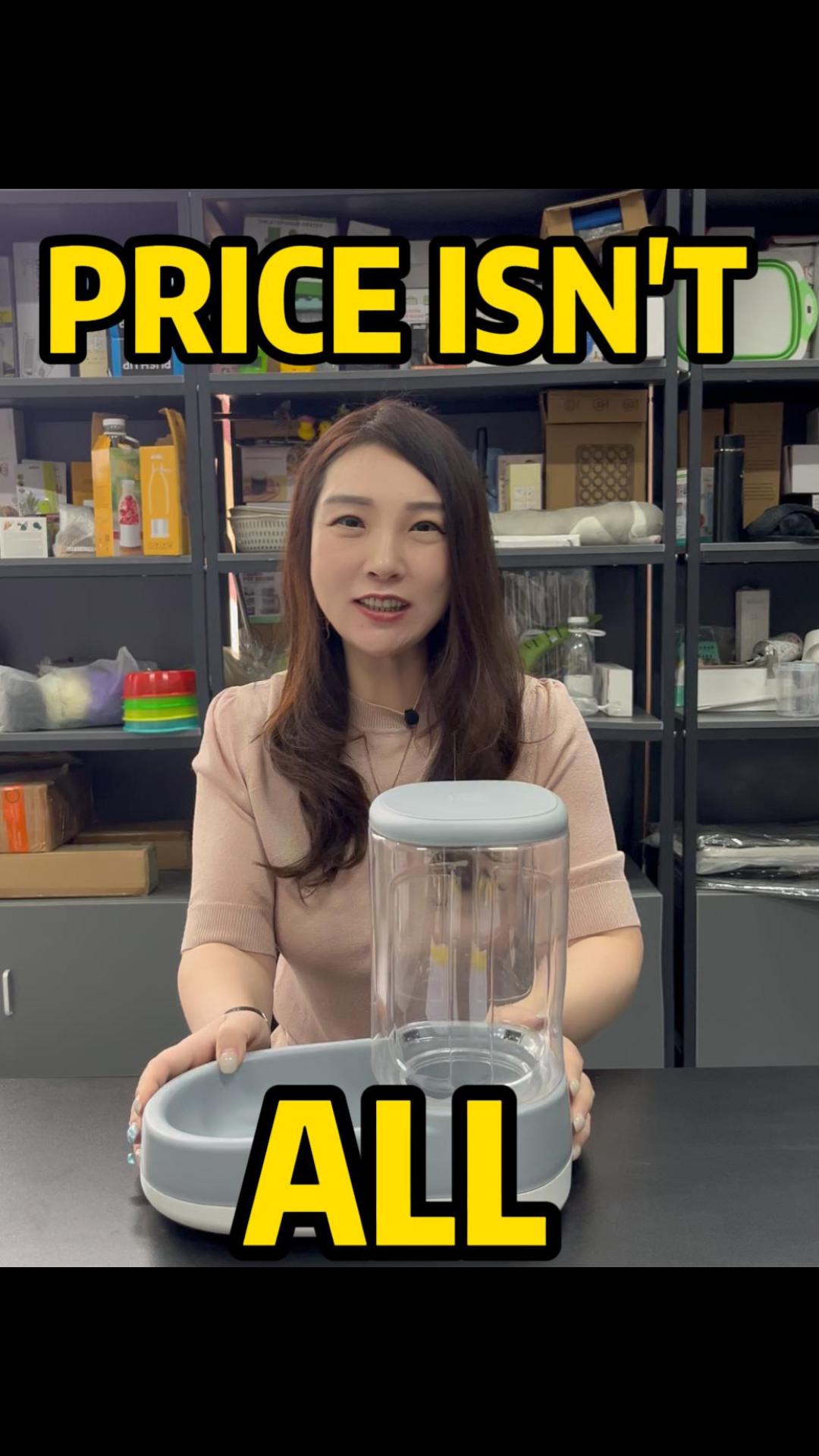
How to Calculate the True Cost of Sourcing Products From China
Many buyers compare products by looking at the unit price first.
A lower quotation may appear more profitable, but the product price is only one part of the total sourcing cost.
Packaging size, shipping method, inspection, labeling, after-sales issues, and potential quality problems can all affect the final cost of an imported product.
Before choosing a product or supplier, professional buyers evaluate the complete cost—not only the price shown on the quotation.
Is the Unit Price the Real Cost?
No.
The unit price tells you how much the supplier charges for the product itself. It does not show how much the product will cost by the time it reaches your warehouse or customer.
The true sourcing cost may include:
- Product price
- Packaging costs
- Custom logo and labeling
- Quality inspection
- Domestic transportation in China
- International freight
- Customs duties and taxes
- Warehousing and fulfillment
- Product damage or defects
- Returns and after-sales costs
A product with a low unit price can become expensive once these additional costs are included.
What Is the Total Landed Cost?
The total landed cost is the complete cost of purchasing and delivering a product to its final destination.
It generally includes:
Product cost + packaging + inspection + transportation + customs-related costs + handling + potential losses
Calculating the landed cost helps buyers compare products more accurately.
For example, Product A may have a lower factory price than Product B. But if Product A requires larger packaging and costs much more to ship, Product B may offer better overall value.
Why Does Product Size Matter?
International freight is often influenced by shipment weight and volume.
For lightweight but bulky products, the shipping company may calculate freight based on volumetric weight rather than actual weight.
This means a product can be inexpensive to manufacture but expensive to transport.
Before sourcing a product, buyers should check:
- Product dimensions
- Packaging dimensions
- Quantity per carton
- Carton volume
- Gross and net weight
- Whether the product can be folded, stacked, nested, or disassembled
Products designed for efficient packing can significantly reduce shipping costs.
Why Packaging Affects the Final Cost
Packaging serves several purposes:
- Protecting products during transportation
- Supporting retail presentation
- Meeting marketplace requirements
- Displaying labels and barcodes
- Improving the customer experience
However, unnecessary packaging can increase both material costs and shipment volume.
Buyers should consider whether the packaging is:
- Strong enough for international shipping
- Suitable for the target market
- Efficient in size
- Easy to stack
- Compliant with retail or ecommerce requirements
- Appropriate for the product's value
The best packaging is not always the largest or most attractive option.
It should protect the product while controlling cost and shipping volume.
How Should Buyers Choose a Shipping Method?
The right shipping method depends on several factors:
- Product size and weight
- Order quantity
- Delivery deadline
- Product value
- Target market
- Inventory requirements
Common shipping options include:
Express Delivery
Express shipping can be suitable for samples, urgent orders, and smaller shipments.
It is fast but may be expensive for bulky products.
Air Freight
Air freight can balance speed and cost for medium-sized shipments or time-sensitive orders.
Sea Freight
Sea freight is generally more suitable for larger or heavier shipments.
For large-volume products, shipping by sea can reduce the freight cost per unit, although the transit time is longer.
The cheapest shipping method is not always the best option. Buyers should balance freight cost, delivery speed, and inventory needs.
Why Quality Problems Are Part of the Cost
Quality issues create hidden costs.
A buyer may save money by choosing the lowest quotation, but defective products can lead to:
- Customer complaints
- Refunds and replacements
- Marketplace penalties
- Rework
- Additional inspection
- Unsellable inventory
- Damage to the buyer's reputation
These losses are often much higher than the original price difference between two suppliers.
Quality inspection before shipment can help identify visible or measurable problems while the products are still in China.
Depending on the product and the buyer's requirements, finished-product inspection may include:
- Appearance and workmanship
- Quantity
- Dimensions
- Basic functions
- Labels and barcodes
- Packaging
- Final shipment confirmation
Why After-Sales Risk Should Be Considered
The sourcing process does not always end when the products are shipped.
Buyers should also consider what happens if customers report problems after delivery.
Questions to evaluate include:
- Is the product easy to damage?
- Are replacement parts available?
- Can the supplier respond to repeated quality issues?
- Is the product difficult or expensive to return?
- Could one defect cause the complete product to become unusable?
- Does the product require complicated customer support?
Products with high after-sales costs may be less profitable, even when their purchase price is low.
How Can Buyers Compare Two Products Correctly?
When comparing two products, buyers should not only compare quotations.
A more useful comparison includes:
| Cost factor | Product A | Product B |
|---|---|---|
| Unit price | ||
| Packaging cost | ||
| Carton size | ||
| Units per carton | ||
| Estimated freight per unit | ||
| Inspection requirements | ||
| Expected defect risk | ||
| After-sales difficulty | ||
| Estimated landed cost |
This makes it easier to identify which product offers better overall value.
A product with a slightly higher unit price may become the more profitable choice if it is easier to pack, cheaper to ship, more reliable, and less likely to create returns.
What Should Buyers Check Before Choosing a Product?
Before confirming a product, buyers should ask:
- What is the estimated landed cost per unit?
- How much space will the product occupy during shipping?
- Can the packaging be optimized?
- Which shipping method is suitable?
- Does the product require customized labels or certification?
- How difficult is quality inspection?
- What problems could occur after delivery?
- Is the product still profitable after all costs are included?
These questions help buyers avoid choosing products that look inexpensive but become costly later.
How Does a Sourcing Company Help Control the Full Cost?
A professional sourcing company should not focus only on obtaining a low quotation.
It should help buyers evaluate the complete sourcing plan.
Depending on the project, this may include:
- Comparing products and suppliers
- Reviewing packaging options
- Checking carton dimensions
- Estimating shipment volume
- Selecting an appropriate shipping method
- Consolidating orders from different suppliers
- Inspecting finished products
- Confirming labels and packaging
- Identifying avoidable sourcing risks
The goal is not simply to lower the product price.
The goal is to control the total cost while maintaining suitable quality and reliable delivery.
Is the Cheapest Product Always the Most Profitable?
No.
Profit depends on what remains after all costs are paid.
A cheap product can lose its price advantage because of:
- Large shipment volume
- Inefficient packaging
- High defect rates
- Expensive returns
- Frequent replacements
- Delayed delivery
- Customer complaints
Professional sourcing looks at the complete picture.
The most profitable product is often the one that balances price, shipping efficiency, quality, market demand, and after-sales risk.
Conclusion
Product price is important, but it is not the full cost.
Before sourcing products from China, buyers should calculate packaging, shipment volume, freight, inspection, labeling, quality risk, and after-sales expenses.
Looking only at the unit price can lead to poor purchasing decisions.
Good sourcing evaluates all costs before choosing a product.
About Youshow
Youshow is a Yiwu-based sourcing company with 18 years of experience helping global buyers source products from China.
Our services include:
- Product sourcing
- Supplier comparison and evaluation
- Packaging and shipment planning
- Finished-product quality inspection
- OEM and ODM customization
- Export certification support
- Order consolidation
- Worldwide shipping
We help importers, wholesalers, retailers, Amazon sellers, and ecommerce businesses simplify procurement and reduce sourcing risks.
Our team evaluates more than the supplier's unit price. We also consider packaging, shipment volume, quality requirements, logistics, and other costs that can affect the buyer's final profitability.