
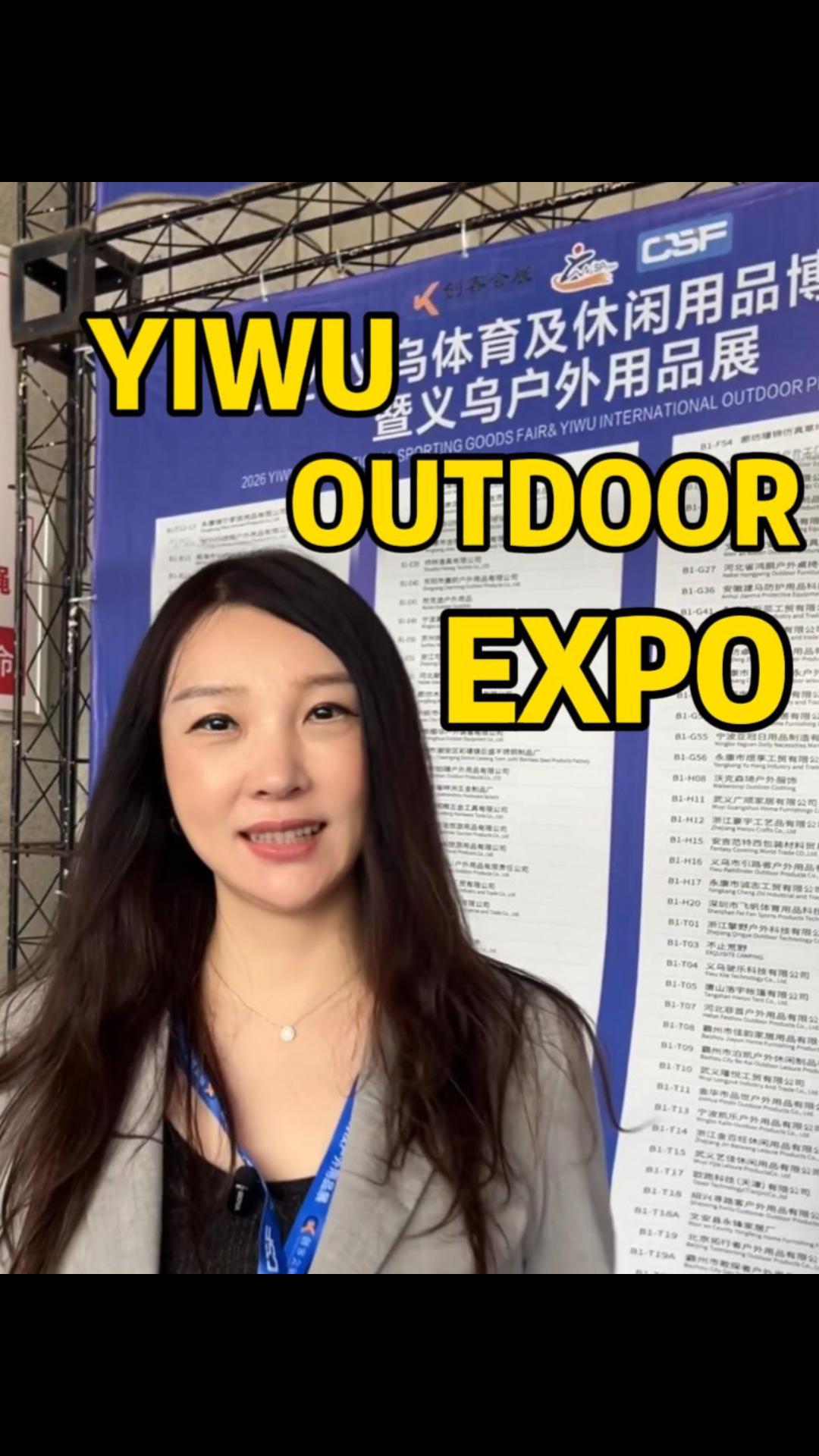
Can a Sourcing Agent Visit China Trade Shows for You?
You find an interesting trade show in China.
There may be new products, suppliers, and sourcing opportunities inside.
But you cannot travel to China.
Do you have to miss the opportunity?
Not necessarily.
A local sourcing agent can visit trade shows on behalf of overseas buyers, search for relevant products, compare options, collect supplier information, show products by photo or video, and follow up with suitable suppliers after the exhibition.
This does not completely replace seeing a product in person.
But for international buyers who cannot attend every exhibition in China, remote trade-show sourcing can provide a practical way to discover and evaluate new sourcing opportunities.
What Is Remote Trade-Show Sourcing?
Remote trade-show sourcing means a local sourcing team attends an exhibition while the overseas buyer participates remotely.
The buyer may first provide:
Product categories
Reference photos
Target price
Required quantity
Target market
Preferred materials
Colors or designs
Packaging requirements
Other sourcing priorities
The sourcing agent then uses those requirements to search the exhibition.
Instead of simply walking through every booth and sending random photos, the goal is to identify products and suppliers that are relevant to the buyer.
What Can a Sourcing Agent Do at a Trade Show?
A sourcing agent can support several stages of the product search.
1. Search for the Buyer's Product Category
Before visiting the exhibition, the sourcing team should understand what the buyer wants.
For example, a buyer interested in outdoor products may be looking for:
Pickleball equipment
Camping accessories
Sports products
Outdoor storage
Fitness accessories
Travel products
The sourcing agent can focus on relevant booths instead of treating the exhibition as a general product tour.
2. Show Products Up Close
A supplier catalog or exhibition photo may not provide enough detail.
At the booth, the sourcing agent can take closer photos or videos showing:
Product shape
Surface details
Size
Color
Packaging
Accessories
Basic construction
For simple products, this can help buyers eliminate unsuitable options quickly.
If more detailed confirmation is needed later, samples can still be arranged.
3. Find Similar Products
Sometimes the first product the buyer sees is not the final choice.
The buyer may ask:
“Do they have anything similar?”
This is one of the advantages of being physically present at an exhibition.
The sourcing agent can look at:
Other models from the same supplier
Different sizes
Alternative materials
Different designs
Similar products from nearby exhibitors
Higher- or lower-priced versions
Instead of evaluating one isolated product, the buyer can compare several sourcing options.
4. Compare Option A and Option B
Product sourcing often becomes easier when buyers can compare specific alternatives.
For example:
Option A
Different surface
Different construction
Different price
Different packaging
Option B
Different design
Different material
Different supplier conditions
The sourcing agent can organize the information so that the buyer can make a more informed decision remotely.
The question becomes less about:
“Do you like this?”
and more about:
“Which option better matches your business?”
5. Record the Buyer's Choices
During an exhibition, buyers may review many products in a short period.
It is easy to forget:
Which supplier had which product
Which model the buyer preferred
Which color was selected
Which booth needed follow-up
Which quotation still needs confirmation
A sourcing team should record the buyer's selected options and connect them to the correct supplier information.
That makes post-show follow-up much easier.
Can Buyers Make Final Decisions From Exhibition Videos?
Sometimes, but not always.
Photos and videos are useful for initial selection.
However, they may not fully communicate:
Material feel
Weight
Product strength
Surface texture
Exact color
Detailed workmanship
Long-term product performance
For important orders, customized products, or larger quantities, physical samples may still be necessary.
A practical process is:
Trade show discovery → Remote product shortlist → Supplier confirmation → Sample → Final order decision
The exhibition helps buyers identify opportunities.
It should not automatically replace proper product verification.
What Information Should Buyers Send Before the Trade Show?
The more clearly the buyer explains the requirement, the more useful the exhibition search can be.
A good sourcing brief may include:
Product Category
For example:
“Pickleball accessories.”
Reference
Send:
Photos
Screenshots
Links
Videos
Existing samples
Target Quantity
For example:
“Initial test order: 200 pieces.”
Target Market
For example:
“US ecommerce market.”
Target Price
An approximate purchasing range can help eliminate options that do not fit the buyer's business model.
Important Requirements
For example:
Retail packaging
Custom logo
Specific material
Smaller MOQ
Lightweight packaging
Certain colors
Without this information, the sourcing agent may find many interesting products that are not actually useful to the buyer.
What Should Be Confirmed With Exhibitors?
Finding an interesting product at a booth is only the beginning.
Before recommending it for purchase, the sourcing team may need to confirm:
Unit price
Price basis
MOQ
MOQ per color or model
Product specifications
Material
Available colors
Stock availability
Sample availability
Lead time
Packaging
OEM or ODM options
Supplier contact information
The trade show is often the discovery stage.
Important commercial information should still be confirmed clearly afterward.
Why Isn't Taking Photos Enough?
A sourcing agent who only sends hundreds of exhibition photos is creating more work for the buyer.
Imagine receiving 300 photos with no explanation.
The buyer still needs to determine:
Which products match the requirement
Which supplier offers them
What the MOQ is
What they cost
Whether customization is possible
Whether delivery fits the timeline
Professional sourcing should reduce this information overload.
Instead of:
300 random products
the buyer should ideally receive:
A smaller number of relevant options with useful sourcing information.
Why Are Trade Shows Useful for Product Discovery?
Online sourcing is convenient, but trade shows can provide different types of information.
At an exhibition, sourcing teams can:
See multiple suppliers in one location
Discover products they were not specifically searching for online
Compare similar items physically
Ask suppliers questions directly
See packaging and product variations
Understand which categories suppliers are actively promoting
Trade shows are particularly useful for discovering new options and expanding a buyer's supplier network.
Are Trade Shows Better Than Online Sourcing?
Not always.
They serve different purposes.
Online Sourcing
Useful for:
Broad supplier searches
Continuous sourcing throughout the year
Initial price comparison
Finding specific known products
Trade Shows
Useful for:
Discovering new products
Seeing many physical samples quickly
Meeting suppliers directly
Comparing related products
Exploring a category in one location
Wholesale Markets
Useful for:
Broad product variety
Ready-stock options
Small-quantity sourcing
Multi-category product searches
Professional sourcing may use all three channels depending on the buyer's needs.
Can a Sourcing Agent Negotiate at the Exhibition?
Initial discussions can happen at the booth, but the final purchasing conditions should usually be confirmed after the complete requirements are clear.
The final quotation may depend on:
Order quantity
Colors
Specifications
Packaging
Logo
Destination
Lead time
Customization
The price mentioned casually during an exhibition should not automatically be treated as the final order price.
A sourcing agent should follow up with the supplier using the buyer's actual requirements.
What Happens After the Trade Show?
This is where exhibition sourcing becomes real procurement work.
After identifying promising products, the sourcing team may:
Organize selected products.
Contact the relevant suppliers.
Confirm current quotations.
Confirm MOQ.
Confirm specifications.
Request detailed product information.
Arrange samples.
Compare supplier options.
Review packaging and customization.
Prepare a quotation or shortlist for the buyer.
If the buyer decides to proceed, the sourcing process can continue into:
Order confirmation
Supplier coordination
Finished-product checking
Packaging confirmation
Consolidation
International shipping
A trade-show visit is only one stage of the full sourcing process.
Can the Buyer Join by Video Call?
When practical, yes.
A live video call can allow the buyer to:
See a booth in real time
Ask to look closer at a product
Compare two models
Ask for another color
Request similar products
Make a quick shortlist
For example:
Buyer:
“Can I see this one up close?”
Sourcing agent:
“Sure.”
Buyer:
“Do they have any similar ones?”
Sourcing agent:
“Here are Option A and Option B.”
Buyer:
“I prefer Option B.”
Sourcing agent:
“I'll note it down and confirm the details.”
This creates a much more interactive sourcing experience than simply sending exhibition photos afterward.
What If the Buyer Is in a Different Time Zone?
Live calls are not always practical.
In that case, buyers can send their sourcing brief in advance.
The sourcing team can then collect:
Photos
Short videos
Supplier information
Product details
Possible alternatives
The buyer can review the materials later and identify which products need further follow-up.
Remote sourcing therefore does not require the buyer to be online for the entire exhibition visit.
Should Buyers Order Directly From the First Supplier They Find?
Usually, comparison is still valuable.
An exhibition may contain several suppliers offering similar products.
Before placing an order, buyers should compare factors such as:
Product quality
Price
MOQ
Supplier reliability
Communication
Lead time
Packaging
Customization
Sample quality
Repeat-order capability
The first attractive booth is not automatically the best supplier.
Trade shows make discovery faster.
Supplier evaluation still matters.
Is Remote Trade-Show Sourcing Suitable for Small Buyers?
It can be especially useful for smaller businesses that cannot justify frequent international travel.
Potential users include:
Ecommerce sellers
Amazon sellers
Small importers
Retail stores
Wholesalers
Startup brands
A buyer may be interested in only one category or a small number of products.
Sending a full purchasing team to China may not be practical.
Local sourcing support provides another way to explore the exhibition.
Can a Sourcing Agent Visit a Trade Show Without the Buyer?
Yes.
The sourcing agent can attend based on a pre-agreed sourcing brief.
However, expectations should be realistic.
The agent can help:
Discover products
Collect information
Compare options
Communicate with suppliers
Arrange follow-up
But the buyer should still make the final commercial decision.
The sourcing agent should not assume what will definitely sell in the buyer's market or guarantee market performance.
The purpose is to provide better sourcing information.
How Can Buyers Make Remote Trade-Show Sourcing More Effective?
Before the exhibition, prepare a simple brief containing:
Products wanted:
[Category / references]
Target quantity:
[Estimated quantity]
Target price:
[Approximate range]
Target market:
[Country / sales channel]
Important requirements:
[Material / packaging / logo / MOQ]
Priority:
[What matters most? Price, quality, MOQ, design, delivery?]
During the exhibition, the sourcing agent can use these criteria to filter products.
Afterward, the buyer can focus only on the most relevant options.
How Does Youshow Support Buyers Who Cannot Come to Yiwu?
When buyers cannot attend relevant Yiwu exhibitions personally, our team can provide local sourcing support based on the project requirements.
Depending on the sourcing task, this may include:
Visiting relevant exhibitions
Searching target product categories
Taking product photos and videos
Showing products through live video
Finding similar options
Recording selected products
Collecting supplier information
Confirming MOQ and quotations
Arranging samples
Comparing suppliers
Following up after the exhibition
If the buyer decides to proceed, our team can continue supporting the project through supplier coordination, finished-product inspection, consolidation, and shipping.
Conclusion
You do not have to attend every trade show in China personally to explore the products inside.
A local sourcing agent can help buyers remotely:
Search the exhibition
View products
Compare alternatives
Record selected options
Contact suppliers
Arrange samples
Continue sourcing after the show
The goal is not simply to “walk the exhibition for you.”
The goal is to turn an exhibition visit into useful sourcing information and practical next steps.
Can't come to the show?
Your sourcing team can still go.
About Youshow
Youshow is a Yiwu-based sourcing company with 18 years of experience helping global buyers source products from China.
Our services include:
Yiwu market and trade-show sourcing
Remote product selection
Supplier comparison and evaluation
Sample collection
Small-quantity and mixed-product sourcing
Finished-product quality inspection
OEM and ODM customization
Order consolidation
Export certification support
Worldwide shipping coordination
We help importers, wholesalers, retailers, Amazon sellers, and ecommerce businesses simplify procurement and reduce sourcing risks.
For buyers who cannot visit Yiwu personally, our team can search markets and relevant exhibitions based on their sourcing requirements, show product options remotely, follow up with suppliers, and coordinate the next steps in China.