
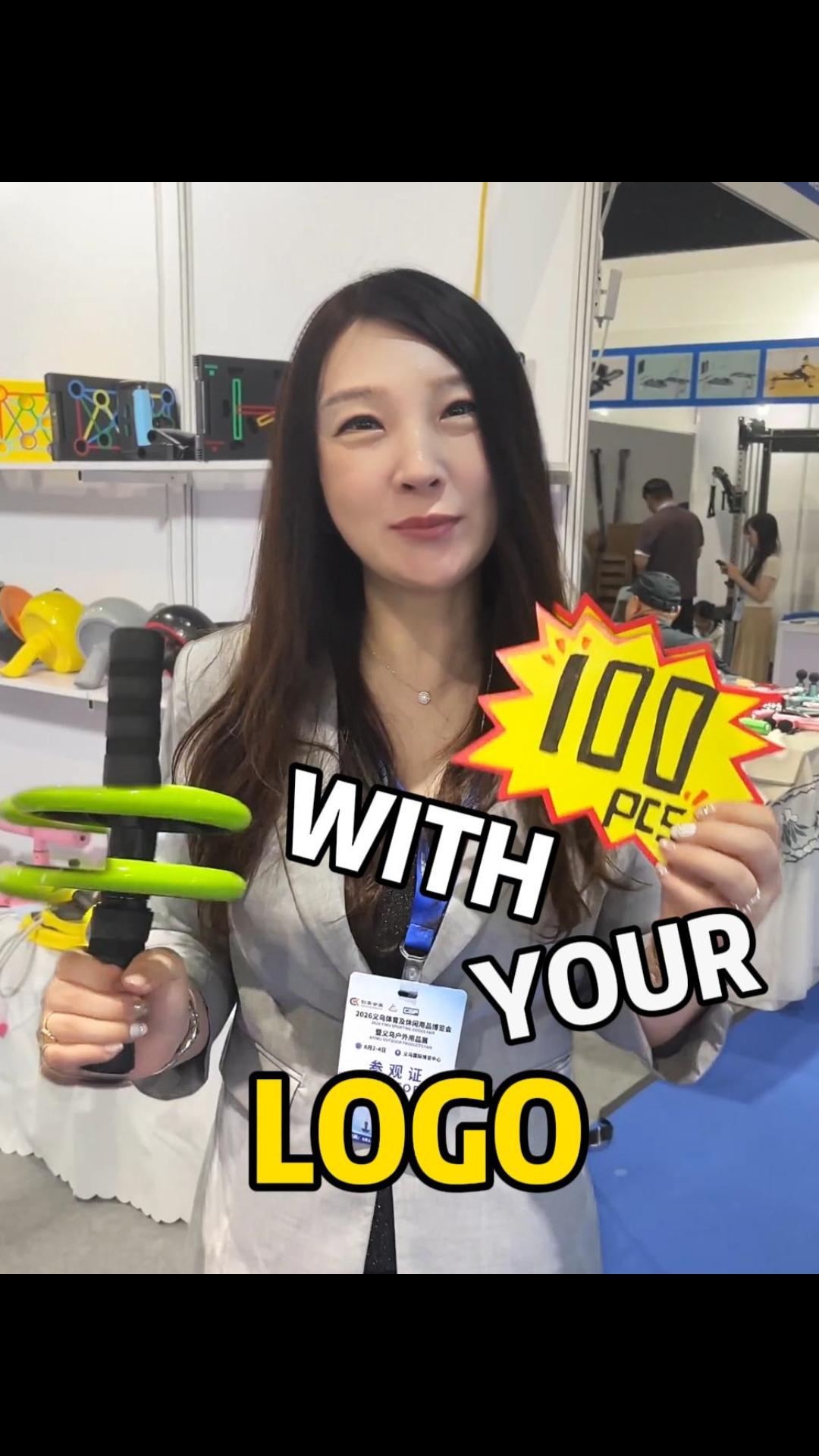
Can You Customize 100 Pieces in China When the Factory MOQ Is 500?
You find the right product.
You only need 100 pieces to test the market.
Then the factory tells you:
“Custom logo MOQ: 500 PCS.”
Do you have to order 500 pieces?
Not always.
For some ready-made products, there is another sourcing option:
Source the existing product first, then add the logo separately in a smaller batch.
For example, instead of asking the original factory to start a 500-piece customized production run, a buyer may be able to source 100 ready-made units and use a separate printing process to add the brand logo.
This approach does not work for every product or every customization method.
But when the product and printing process are suitable, separating product sourcing from logo customization can make small-batch testing much more flexible.
Why Do Factories Require 500 PCS for a Custom Logo?
A factory MOQ is usually connected to production efficiency.
Adding a custom logo may require:
Printing setup
Screens or printing plates
Artwork preparation
Machine setup
Color matching
Customized packaging
Additional labor
Production scheduling
For the original factory, running these processes for only 100 pieces may not be economical.
That is why the factory may say:
Standard product: smaller quantity available
but:
Custom logo: minimum 500 pieces
The MOQ may be based on the customization process rather than the physical product itself.
Does Factory MOQ Always Mean Product MOQ?
No.
Buyers should separate several different MOQ concepts.
Product MOQ
The minimum quantity required to purchase the product.
Customization MOQ
The minimum quantity required to add a logo, custom color, printing, or another modification.
Packaging MOQ
The minimum quantity required for custom boxes, bags, labels, or printed packaging.
These quantities may be completely different.
For example:
Ready-made product MOQ: 100 PCS
Factory logo MOQ: 500 PCS
Custom box MOQ: 1,000 PCS
If buyers only ask:
“What is the MOQ?”
they may receive an incomplete answer.
A better question is:
“What is the MOQ for the product, the logo, and the packaging separately?”
How Can 100 PCS Customization Work?
For suitable products, the sourcing process can be separated into two stages.
Stage 1: Source the Ready-Made Product
Instead of asking the manufacturer to start customized production, the sourcing team first finds an existing product that already meets the buyer's main requirements.
This may include checking:
Product model
Material
Size
Color
Existing stock
Product quality
Order quantity
Packaging
If 100 suitable ready-made units are available, they can be sourced without triggering the factory's higher custom-production MOQ.
Stage 2: Add the Logo Separately
After the ready-made products are sourced, they can be sent to a suitable printing or customization facility.
Depending on the product, logo application may involve methods such as:
Screen printing
Pad printing
Heat transfer
UV printing
Embroidery
Laser engraving
Labels or stickers
The suitable method depends on:
Product material
Surface shape
Logo size
Logo colors
Durability requirements
Order quantity
Target appearance
At Youshow, for suitable projects, we can coordinate the printing through our own printing facility after sourcing the ready-made product.
This allows some buyers to test customized products in quantities below the original manufacturer's customization MOQ.
Why Is This Useful for Market Testing?
Imagine a buyer wants to launch a new branded product.
The original factory requires:
500 PCS with logo
But the buyer does not yet know:
Whether customers will like the product
Whether the selling price will work
Which color will sell best
Whether the packaging needs improvement
Whether the product will generate repeat orders
Ordering 500 customized units immediately creates a larger inventory commitment.
If a 100-piece customized test is possible, the buyer can first collect real market feedback.
The process becomes:
100 PCS test → Market feedback → Improve the offer → Larger repeat order
This can reduce the amount of capital tied up in an untested product.
Is 100 PCS Customization Available for Every Product?
No.
This is important.
A small-batch logo solution depends on the actual product.
Some products are easy to customize after production.
Others are not.
Small-batch post-production customization is more suitable when:
The product already exists as ready stock
The logo can be added to the finished surface
Printing does not require changing the product structure
The material is compatible with the printing method
The logo area is accessible
The product does not require a new mold
The existing product already meets the buyer's specifications
It may not work when customization requires:
New molds
Material changes
Custom product colors during manufacturing
Structural modifications
Integrated branding during production
Specialized factory equipment
Complex multi-stage finishing
In those cases, the original factory's MOQ may still be necessary.
What Types of Customization Are Easier in Small Batches?
Light customization is generally easier than full product development.
Examples may include:
Logo Printing
Adding an existing brand logo to a suitable finished product.
Stickers and Labels
Adding product information, branding, SKU labels, or barcodes.
Simple Packaging Changes
Using an existing product while changing:
Insert cards
Stickers
Labels
Sleeves
Simple outer packaging
Engraving
For suitable materials, laser engraving may support smaller quantities.
The exact minimum quantity still depends on the product and processing method.
What Is Harder to Customize in Small Quantities?
Some customization needs are fundamentally production-related.
Examples include:
Custom plastic colors
Custom metal shapes
New molds
New product dimensions
Unique electronic functions
Structural changes
Completely new packaging structures
Special materials
These changes often require the factory to modify the production process.
In these cases, a higher MOQ is usually more difficult to avoid.
The sourcing strategy should therefore begin by understanding exactly what the buyer means by “custom.”
Logo Customization vs. Product Customization
These two terms should not be treated as the same thing.
Logo Customization
The existing product stays the same.
Only branding is added.
Example:
Existing product + your logo
This is often easier to handle in smaller batches.
Product Customization
The physical product changes.
For example:
Different dimensions
Different materials
Different structure
Custom components
New color during manufacturing
This usually requires deeper factory involvement and may result in a higher MOQ.
For buyers testing a new market, starting with logo customization can sometimes be more practical than immediately developing a fully customized product.
What Should Buyers Send for a Small-Batch Logo Quote?
If you want to know whether 100-piece customization is possible, send the sourcing team:
Product Reference
Provide:
Photo
Video
Product link
Existing sample
Required Quantity
For example:
100 PCS
Logo File
Preferably provide a clear vector file when available.
Common formats may include:
AI
EPS
PDF
SVG
The printing team may need an appropriate artwork file depending on the printing process.
Logo Size
For example:
40 mm × 20 mm
Logo Position
Show exactly where you want the branding.
Logo Colors
A one-color logo may use a different printing process or cost structure from a multi-color logo.
Destination Market
This helps the sourcing team understand the buyer's general product and packaging requirements.
How Do We Choose the Printing Method?
The cheapest printing method is not automatically the best one.
The printing method should match:
Material
Surface
Shape
Logo design
Quantity
Required durability
Buyer expectations
For example, a printing method that works well on fabric may not be suitable for hard plastic.
Before printing the full order, the team should confirm whether the logo can be applied clearly and consistently to the selected product.
Should Buyers Make a Logo Sample First?
For branded products, confirming a sample can be useful before processing the complete quantity.
The sample can help buyers review:
Logo position
Logo size
Color
Printing clarity
Overall appearance
Product compatibility
This is particularly important when:
The logo is complex
The product surface is unusual
The brand color needs to be accurate
The buyer has not used the printing process before
A small order is still an order.
Logo errors across 100 pieces are still expensive to correct after shipment.
Does Small-Batch Customization Cost More Per Unit?
It can.
A smaller order may have a higher customization cost per unit because setup costs are distributed across fewer products.
For example, the printing process may include a fixed setup charge.
If that charge is spread across:
100 pieces
the additional cost per product will be higher than if it is spread across:
1,000 pieces
Buyers should therefore evaluate the objective of the order.
For a market test, paying slightly more per unit may still make sense if it avoids holding hundreds of additional customized products in inventory.
Should Buyers Focus Only on the Lowest Printing Price?
No.
Customization quality is part of the final product.
Buyers should consider:
Print accuracy
Position consistency
Adhesion
Durability
Color
Surface compatibility
Product appearance
A low-cost logo that scratches off easily or appears in different positions across the order can reduce the perceived value of the product.
For branded products, the logo is part of the customer experience.
Can You Mix Colors in a 100-Piece Custom Order?
Sometimes.
For example, a ready-stock product may be available in five colors.
The buyer may want:
20 black
20 white
20 green
20 blue
20 pink
with the same logo applied to all 100 pieces.
Whether this works depends on:
Stock availability
MOQ per color
Printing process
Logo requirements
Product material
Processing setup
This can be a useful way to test both the product and different color preferences.
However, the color breakdown should be confirmed before the order is placed.
Can Buyers Use Custom Packaging With Only 100 PCS?
Possibly, but packaging should be evaluated separately from product customization.
Custom printed boxes often have their own MOQ.
For a smaller test order, alternatives may include:
Standard box + logo sticker
Standard polybag + branded label
Printed insert card
Custom sleeve
Thank-you card
This can create some brand presentation without requiring a large custom-packaging production run.
The best option depends on the product and sales channel.
What Is the Difference Between This and Factory Custom Production?
The two sourcing methods are fundamentally different.
Factory Custom Production
The manufacturer incorporates the customization into its own production process.
Advantages may include:
More customization options
Better integration with the product
Greater efficiency at larger volumes
But it may require:
Higher MOQ
Longer lead time
Larger initial investment
Ready-Made Product + Separate Customization
The product already exists.
Branding is added afterward.
Potential advantages include:
Smaller test quantities
Faster market testing
Lower initial inventory
More flexibility
But the available customization is usually more limited.
The correct solution depends on the buyer's stage and product requirements.
When Should Buyers Move From 100 PCS to Factory Production?
Small-batch customization is useful for testing.
It is not necessarily the best long-term solution once order volumes increase.
Suppose a buyer tests 100 pieces and receives strong sales.
The next orders may be:
500 PCS
1,000 PCS
3,000 PCS
At larger quantities, it may become more efficient to work directly with the factory on integrated customization.
The sourcing strategy can evolve:
Stage 1 — Test
Ready-made product + small-batch logo
Stage 2 — Validate
Repeat order with improved branding
Stage 3 — Scale
Factory-level OEM customization
This allows the supply chain to grow with the business.
Why Is This a Sourcing Strategy, Not Just a Printing Service?
Because the real challenge is connecting several parts of the supply chain.
The sourcing team needs to determine:
Can the product be sourced in 100 pieces?
Is the product suitable for post-production customization?
Which printing method works?
Can the logo quality meet expectations?
Does the total cost still make business sense?
Can the process scale later?
The solution is created by combining:
Product sourcing + customization resources + quality checks + logistics
This is where a sourcing company can provide value beyond simply asking the original factory for a lower MOQ.
How Can a Sourcing Company Help?
For suitable projects, a sourcing company can help buyers:
Search for ready-made products
Confirm available quantities
Compare suppliers
Confirm product quality
Evaluate whether post-production customization is practical
Select a printing method
Arrange logo samples
Coordinate printing
Check finished products
Confirm packaging
Consolidate the order
Arrange worldwide shipping
Instead of forcing one factory to do everything, the sourcing process can use different specialized resources.
What Questions Should Buyers Ask?
If the factory says:
“500 PCS minimum for custom logo.”
Ask:
Is there a ready-made version available?
What is the MOQ without customization?
Can I purchase 100 ready-made units?
Can the logo be added after production?
Which printing method is suitable?
What is the small-batch printing cost?
Can I approve a logo sample first?
Can different stock colors be mixed?
Does the packaging need to change?
What happens if I scale to 500 or 1,000 pieces later?
These questions can reveal sourcing options that are not visible from the factory's original MOQ.
Conclusion
A factory's 500-piece logo MOQ does not always mean buyers must start with 500 customized units.
For some suitable ready-made products, buyers may be able to:
Source 100 pieces first → Add the logo separately → Test the market → Scale later
This approach can help businesses reduce initial inventory and validate a branded product before committing to a larger production run.
But it is not a universal workaround.
The product, stock availability, logo, material, printing method, packaging, and supplier requirements all need to be checked first.
The best sourcing solution is not always asking one factory to do everything.
Sometimes it is building a more flexible process around what the buyer actually needs.
About Youshow
Youshow is a Yiwu-based sourcing company helping global buyers source and manage products from China.
For suitable small-batch customization projects, our services can include:
Ready-made product sourcing
Small-quantity sourcing
Mixed-color sourcing
Supplier comparison
Logo printing through our printing facility
Sample confirmation
Finished-product quality inspection
Packaging and label coordination
Order consolidation
OEM and ODM sourcing
Export certification support
Worldwide shipping coordination
When a factory's customization MOQ is higher than the buyer's test quantity, our team can evaluate whether sourcing the ready-made product first and completing suitable logo processing separately provides a practical alternative.
The solution depends on the product and customization requirements, so every project is evaluated individually.