
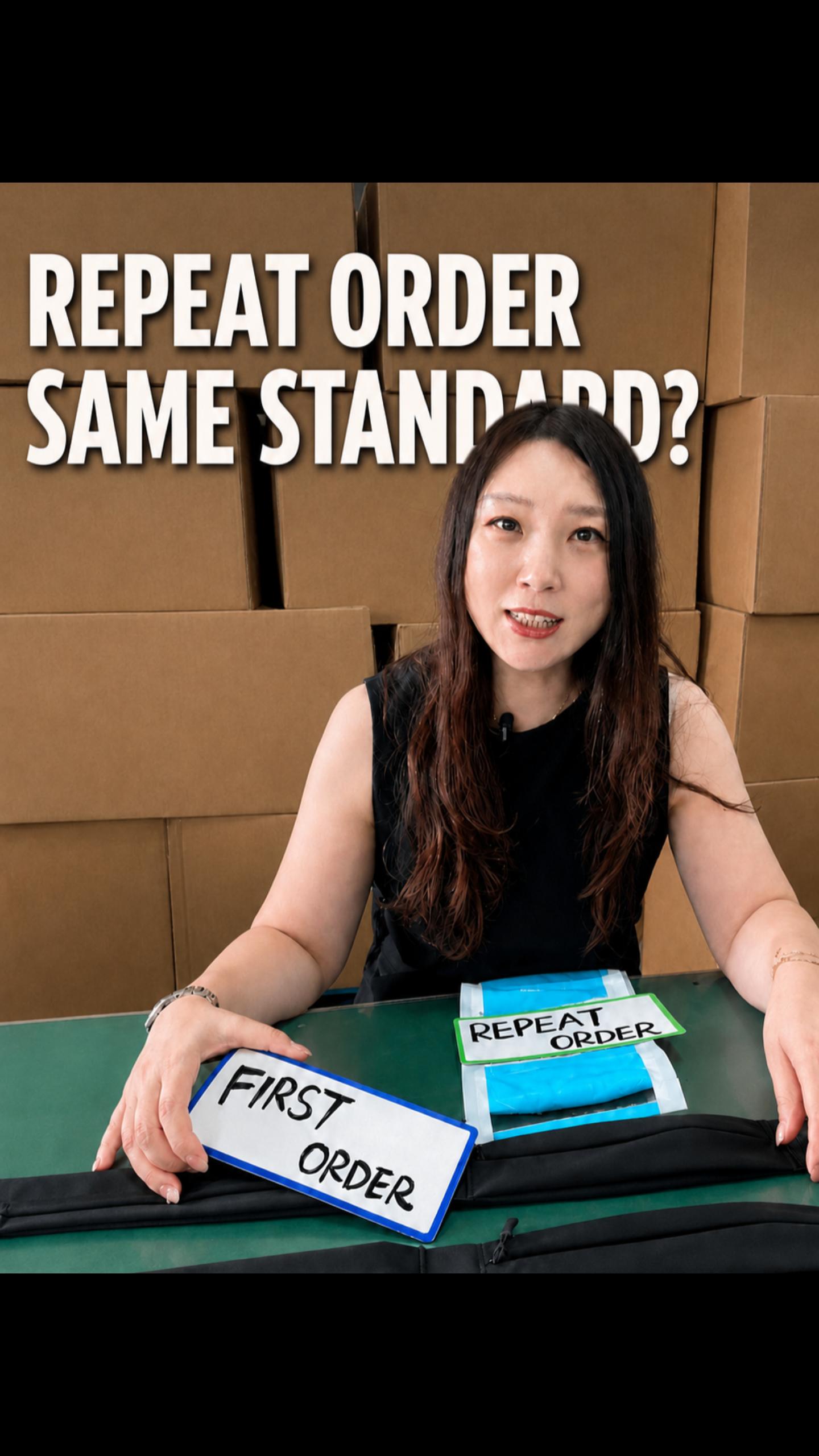
How to Keep Repeat Orders Consistent When Sourcing From China
The first order arrives.
The product looks good.
Customers accept it.
You place a repeat order with the same supplier.
So the second shipment should be exactly the same, right?
Not necessarily.
Repeat orders can look almost identical at first glance while containing small differences in:
Material
Dimensions
Color
Printing
Accessories
Packaging
Workmanship
That is why repeat-order quality should not rely on memory.
It should rely on a confirmed standard.
A practical rule is:
First order approved → Keep the reference → Compare every repeat order against it
The goal is simple:
Your customer should not receive a noticeably different product simply because it came from a later production batch.
Why Can Repeat Orders Change?
Buyers sometimes assume that once a factory has produced the product correctly, every future order will automatically be identical.
But manufacturing involves many variables.
Between two production runs, the supplier may have:
Purchased a new batch of materials
Changed a component supplier
Used a different production line
Changed workers
Replaced packaging
Adjusted printing
Modified a process
Changed the subcontractor handling one part of the product
None of these changes automatically means the supplier is unreliable.
But they can affect the finished product.
That is why consistency needs to be checked rather than assumed.
The Biggest Repeat-Order Mistake: “It Looks the Same”
In the video, the first order and repeat order initially look very similar.
That is intentional.
Many differences are difficult to see from a distance.
Two products can have:
The same shape
The same general color
The same logo
Similar packaging
and still differ in ways that matter.
For example:
The material may feel thinner.
The dimensions may have shifted slightly.
The print may be positioned differently.
The color may be warmer or cooler.
A component may have changed.
So repeat-order confirmation should go beyond:
“Looks good.”
What Should a Repeat Order Be Compared Against?
The strongest reference is usually a combination of:
An approved physical sample or retained first-order sample
Written product specifications
Approved artwork
Packaging requirements
Quantity and SKU records
Together, these create a repeatable product standard.
The supplier should not need to guess what “same as last time” means.
The buyer should be able to show exactly what needs to remain consistent.
What Is an Approved Sample?
An approved sample is a physical product that the buyer has reviewed and accepted as the reference for the order.
Depending on the project, it can help confirm:
Appearance
Material
Dimensions
Color
Printing
Basic function
Components
Packaging
For repeat orders, that sample can become an important comparison point.
Instead of saying:
“Please make it like before.”
the sourcing team can say:
“Please follow the approved first-order sample and confirmed specifications.”
That is much clearer.
Should You Keep a Sample From the First Production Order?
For suitable products, yes.
A retained sample from the approved first batch can be valuable for future orders.
It provides a physical reference for:
Material feel
Product construction
Print appearance
Color
Dimensions
Packaging
This is especially useful when the next order is placed months later.
Human memory is not a reliable quality-control system.
A physical reference is better.
1. Check the Material Again
Material is one of the areas most likely to create noticeable differences.
A repeat order may look similar but use:
Thinner fabric
Different plastic
Different coating
Different filling
Different hardware
Different surface treatment
Depending on the product, material differences can affect:
Durability
Weight
Appearance
Feel
Function
Customer perception
For repeat orders, the material should be compared with the previously confirmed standard when it is an important product characteristic.
Why Might Material Change?
There can be several reasons.
The supplier's original material source may be unavailable.
Material prices may have changed.
A subcontractor may use an alternative.
The supplier may believe the substitute is equivalent.
Sometimes the difference is acceptable.
Sometimes it is not.
The important point is:
The buyer should know before shipment.
2. Check the Dimensions Again
A repeat order should not assume that dimensions will remain identical automatically.
Depending on the product, check:
Length
Width
Height
Thickness
Diameter
Capacity
Component dimensions
Even small changes can matter.
For example, they may affect:
Fit
Product function
Packaging
Customer expectations
Compatibility with accessories
The agreed tolerances should be appropriate for the product.
Why Do Dimensions Drift?
Production tools, cutting, assembly, material behavior, and process changes can all create small variations.
Some tolerance is normal in manufacturing.
The question is whether the new batch remains within the buyer's confirmed acceptable range.
The goal is not unrealistic perfection.
It is controlled consistency.
3. Compare the Color
Color is another common repeat-order issue.
The first batch may be:
Dark navy
while the repeat batch is slightly:
Brighter blue
Both may technically be called “blue.”
But customers who reorder the same SKU may notice the difference.
Color variation can result from:
Different material batches
Dye lots
Printing
Supplier changes
Lighting during approval
Production processes
For color-sensitive products, keep a clear approved reference.
Why Is Color Consistency Important?
Imagine a retailer displays the first batch beside the repeat order.
If the colors are noticeably different, the products may no longer look like the same SKU.
For brands, this can weaken product consistency.
For sets or replacement purchases, it can create an even bigger problem.
The importance of color matching depends on the product, but it should be considered deliberately.
4. Check Printing and Logo Details
A repeat order with the same artwork can still produce different printing results.
Check:
Logo position
Logo size
Print color
Print clarity
Orientation
Spacing
Surface adhesion where relevant
The artwork file may be identical.
The execution can still vary.
A repeat order should therefore compare the actual finished printing—not simply confirm that the same file was sent again.
Why Can Printing Change?
Possible reasons include:
Different printing operator
Different machine settings
Different ink
Different printing supplier
Different positioning fixture
Different product surface
This is why print approval is not a one-time administrative task.
The finished batch should still match the approved standard.
5. Check Components and Accessories
Some repeat-order differences are not visible until the package is opened.
For products with multiple components, verify that the repeat order includes the same agreed items.
Examples may include:
Straps
Screws
Cables
Lids
Inserts
Bags
Connectors
Instruction sheets
A supplier may change an accessory because the original one is no longer available.
That change should not happen silently if it affects the agreed product.
6. Check Packaging Again
Packaging can drift between orders too.
A supplier may change:
Polybag thickness
Retail box
Inner protection
Carton size
Label position
Quantity per carton
Sometimes these changes are harmless.
Sometimes they affect:
Product protection
Freight
Retail presentation
Warehouse receiving
FBA preparation
Repeat orders should therefore include packaging confirmation when packaging is part of the product requirement.
7. Check Labels and Barcodes
Repeat orders can create problems when old information is reused without checking.
Confirm:
SKU
Barcode
Color
Size
Product name
Quantity
Buyer-required labels
A supplier may have an old label file saved from the first order.
If anything has changed since then, using that old file can create a mistake.
Do not assume:
“Same product = same labels forever.”
Confirm the current requirement.
8. Check Basic Function Where Relevant
For products with functional elements, repeat orders should still be checked.
Depending on the product, this may include:
Opening and closing
Assembly
Folding
Buttons
Fit
Stability
Basic operation
The first batch passing a function check does not guarantee later production will behave exactly the same.
First Order Passed. Why Check Again?
Because quality control is not a certificate that lasts forever.
It is a process.
The first inspection tells you:
This batch met the agreed standard at that time.
It does not tell you:
Every future batch will automatically meet it.
Each new production batch creates another opportunity for variation.
Repeat Order Does Not Mean Repeat Conditions
This is an important concept.
The purchase order may look the same.
But the factory conditions may not be.
Between orders, there may be changes in:
Materials
Workers
Production capacity
Supplier subcontractors
Packaging
Equipment
Seasonal workload
This is why repeat orders still need quality management.
What Is a Golden Sample?
In sourcing, buyers sometimes use the term golden sample to describe the approved physical reference used for future comparison.
The exact terminology is less important than the practice.
The reference should clearly represent what the buyer approved.
For example, it can establish expectations for:
Color
Material
Construction
Appearance
Printing
For repeat orders, the team can compare the new batch against this reference.
Is a Physical Sample Enough?
Not always.
A sample can show many things, but it may not contain every commercial requirement.
For example, it may not clearly communicate:
Quantity
Allowed tolerances
Barcode
Carton packing
Required accessories
Label wording
Shipping marks
That is why the strongest repeat-order standard combines:
Physical reference + written specification
Build a Repeat-Order Specification Record
A practical product record might include:
| Item | Confirmed Standard |
|---|---|
| Product | Model / SKU |
| Material | Confirmed specification |
| Dimensions | Approved dimensions / tolerance |
| Color | Approved reference |
| Logo | Approved artwork and position |
| Accessories | Required list |
| Packaging | Approved format |
| Barcode | Confirmed file |
| Units/carton | Confirmed quantity |
| Sample | Approved reference retained |
This record can be reused for future orders.
It turns “same as last time” into something measurable.
Why Is “Same as Last Time” Too Vague?
Imagine the supplier asks:
“Which detail should be the same?”
The buyer replies:
“Everything.”
That sounds clear, but operationally it is not.
A factory needs specific references.
Which material?
Which thickness?
Which size?
Which shade?
Which packaging?
Which logo position?
The more important the product is to the buyer's business, the more useful it is to document these details.
What Should Be Confirmed Before a Repeat Order Is Placed?
Before issuing the repeat order, confirm whether anything is supposed to change.
Ask:
Same product specification?
Same material?
Same colors?
Same quantity breakdown?
Same logo?
Same packaging?
Same labels?
Same destination?
A repeat order may intentionally include changes.
Those changes should be clearly separated from the standards that must remain the same.
Version Control Matters
Imagine:
First order:
Packaging Version A
Second order:
Buyer changes the barcode.
Third order:
Supplier accidentally uses the first-order barcode again.
Without proper version control, old files can reappear.
Use clear filenames and dates where practical.
For example:
SKU123_Label_US_2026-09.pdf
rather than:
new label final final 2.pdf
Good file management is part of repeat-order consistency.
Should the Supplier Be Told It Is a Repeat Order?
Yes.
The supplier should know which previous order or approved standard the new order refers to.
Useful references can include:
Previous PO number
SKU
Sample reference
Artwork version
Packaging version
This helps the supplier retrieve the correct information.
Compare First Order vs. Repeat Order
The video uses a simple visual test:
Which one is the repeat order?
At first glance, the answer is difficult.
That is actually the goal.
A successful repeat order should not create obvious unexplained differences.
But visual similarity alone is not enough.
A structured comparison can include:
| Check | First Order | Repeat Order |
|---|---|---|
| Appearance | Reference | Compare |
| Material | Approved | Compare |
| Dimensions | Approved | Measure |
| Color | Approved | Compare |
| Printing | Approved | Compare |
| Accessories | Approved | Confirm |
| Packaging | Approved | Confirm |
| Quantity | PO | Confirm |
This turns consistency into a process.
What If a Small Difference Is Found?
Not every difference requires rejecting the entire order.
First determine:
What changed?
How large is the difference?
How many units are affected?
Does it affect function?
Does it affect appearance?
Does it affect customer expectations?
Is it within the agreed tolerance?
Possible outcomes include:
Accept
The difference is minor and commercially acceptable.
Rework
The supplier corrects the issue.
Replace
Affected units are replaced.
Separate
Non-conforming units are removed.
Buyer Approval
The sourcing team reports the difference and the buyer makes the final decision.
The important thing is that the change is identified before shipment.
Why Should Buyers Avoid Silent Substitutions?
Suppose the supplier can no longer obtain the original material.
The wrong response is:
Substitute something similar and say nothing.
The better process is:
Supplier reports the situation.
Alternative is proposed.
Buyer reviews the difference.
Sample is confirmed if necessary.
Production proceeds after approval.
This protects repeat-order consistency while still allowing the supply chain to adapt.
What About Supplier Cost Increases?
Material prices may change between orders.
That creates another risk.
A supplier may face pressure to maintain the old price despite higher input costs.
Buyers should not assume that the product can remain identical forever at any price.
If the supplier says costs have changed, discuss:
Why
Which material
Whether the specification changes
Alternative options
A transparent price conversation is better than an unapproved reduction in specification.
Consistency Can Matter More Than Small Price Differences
For repeat business, consistency may be more valuable than saving a few cents.
Imagine your customers already know Product A.
The repeat order arrives with:
Different material feel
Slightly different color
Different packaging
Even if the new version is technically acceptable, customers may perceive the brand as inconsistent.
For established products, the sourcing objective often changes from:
Find the cheapest acceptable option
to:
Maintain a predictable standard.
Why Is This Especially Important for Retailers?
Retailers may place products from different batches on the same shelf.
If the batches look different, customers can compare them directly.
Potential issues include:
Color mismatch
Packaging inconsistency
Different logos
Different dimensions
Repeat-order quality therefore affects retail presentation as well as product function.
Why Is This Important for Ecommerce Sellers?
Ecommerce listings usually represent one consistent product.
The customer sees:
Photos
Dimensions
Color
Material description
Product claims
If later batches change but the listing remains the same, customer expectations may no longer match the product.
This can contribute to:
Complaints
Returns
Poor reviews
Repeat-order consistency protects the connection between the listing and the physical product.
What About Amazon Sellers?
For sellers using fulfillment platforms, repeat-order changes can also affect:
Barcode
Packaging
Product dimensions
Unit weight
Bundle contents
If these details change, the existing fulfillment setup may need to be reviewed.
This is another reason to document product standards rather than rely on memory.
What About Wholesalers?
Wholesalers need repeat-order consistency because their own customers may reorder the same SKU.
A downstream retailer does not want to discover that:
“Same SKU” now means a visibly different product.
The wholesaler's reputation depends partly on predictable supply.
How Often Should Repeat Orders Be Checked?
The appropriate QC approach depends on:
Product
Supplier history
Order size
Product complexity
Previous issues
Buyer risk tolerance
A supplier with a strong history may justify a different inspection plan from a new supplier.
But “we have ordered before” should not automatically mean:
No checks needed.
The inspection scope can evolve.
The standard should remain clear.
Should Every Repeat Order Be Compared With the Original First Order Forever?
Not necessarily.
Sometimes the approved standard changes intentionally.
For example:
Version 1:
Original packaging
Version 2:
Improved packaging
Once Version 2 is approved, it may become the new reference.
The important part is controlled change.
Each approved update should replace the old standard clearly.
How Does a Sourcing Company Help With Repeat Orders?
A sourcing company can act as the local reference point between the buyer and supplier.
Depending on the project, support may include:
Keeping confirmed product records
Reviewing previous order requirements
Confirming repeat-order specifications
Coordinating supplier changes
Comparing finished goods against the agreed reference
Checking quantity
Checking dimensions
Checking basic functions
Reviewing labels
Reviewing packaging
Reporting differences before shipment
Coordinating corrective action
Final pre-shipment confirmation
For overseas buyers, this creates a local checkpoint before the repeat batch leaves China.
Youshow's Finished-Product QC Scope
At Youshow, our quality-control work focuses on finished products.
Depending on the product and agreed requirements, checks can include:
Appearance and workmanship
Quantity
Dimensions
Basic functions
Labels
Packaging
Final pre-shipment confirmation
We do not position our service as raw-material or semi-finished production inspection.
For repeat orders, the important additional step is comparing the new finished batch against the buyer's approved product reference and confirmed records.
What Should Buyers Send for a Repeat Order?
A useful repeat-order request can include:
Previous order number:
[PO / reference]
Product:
[SKU / model]
Quantity:
[New quantity]
Changes:
[None / specify changes]
Reference:
[Approved sample / specification]
Packaging:
[Same / updated]
Labels:
[Same / updated]
This immediately tells the sourcing team what should remain consistent and what should change.
A Better Repeat-Order Workflow
A professional repeat-order process can look like:
1. Retrieve previous approved standard
↓
2. Confirm whether anything changes
↓
3. Send current specification to supplier
↓
4. Confirm price and lead time
↓
5. Place repeat order
↓
6. Follow production progress
↓
7. Review finished batch
↓
8. Compare against approved reference
↓
9. Resolve differences if necessary
↓
10. Release for shipment
The key point is:
Repeat order does not mean skip the process.
It means reuse the standard.
What Is the Main Lesson?
The first successful order creates something valuable:
A benchmark.
Do not throw it away.
Use it.
For the next order, ask:
Same material?
Same dimensions?
Same color?
Same printing?
Same packaging?
Same agreed quality?
The supplier may already know the product.
But the buyer should still verify that the new batch meets the same standard.
Conclusion
Repeat order.
Same supplier.
Same product.
That still does not automatically mean:
Same standard.
A new production batch can introduce small changes that are difficult to notice from appearance alone.
That is why buyers should keep:
An approved reference sample
Written specifications
Artwork
Packaging requirements
Product records
Then compare the repeat batch against those references before shipment.
The goal is not to distrust the supplier.
The goal is to make product consistency repeatable.
Because for your customer:
Same SKU should mean the same product experience.
About Youshow
Youshow is a Yiwu-based sourcing company helping global buyers source and manage products from China.
Our services include:
Product sourcing
Supplier comparison and evaluation
Sample collection
Repeat-order coordination
Finished-product quality inspection
Product-specification confirmation
Label and packaging checks
OEM and ODM customization
Order consolidation
Export certification support
Worldwide shipping coordination
We help importers, wholesalers, retailers, Amazon sellers, and ecommerce businesses simplify procurement and reduce sourcing risks.
For repeat orders, our team can review the buyer's previously approved reference and confirmed records, then compare the new finished batch across relevant points such as appearance, quantity, dimensions, basic functions, labels, packaging, and other agreed finished-product details.
The objective is straightforward:
The new batch should meet the same approved standard before it ships.

