
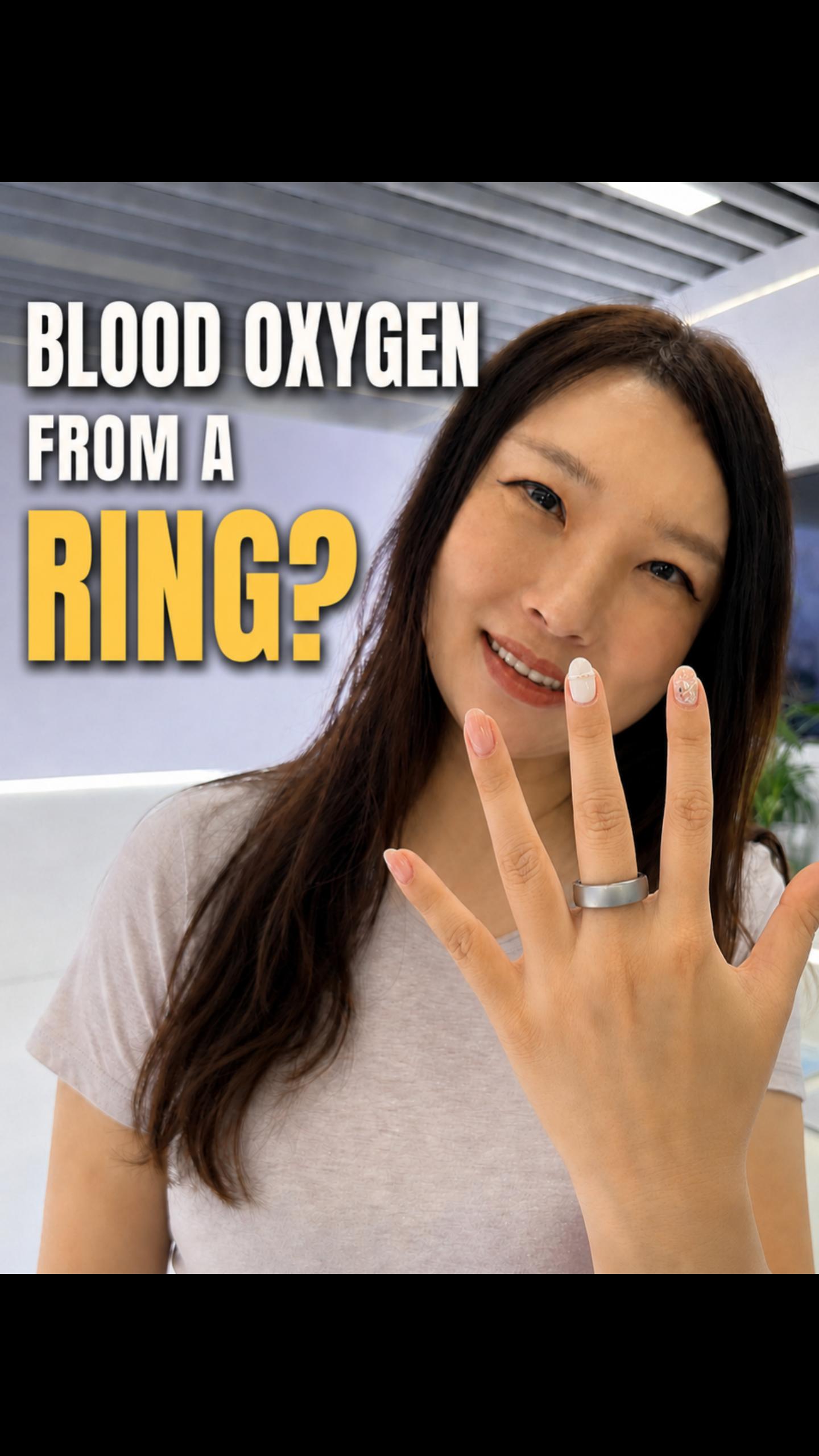
What Should Buyers Check Before Sourcing a Smart Health Ring From China?
A smart ring looks simple.
Put it on your finger, connect it to an app, and start viewing data such as heart rate, blood oxygen trends, sleep, activity, or other wellness information.
From a sourcing perspective, however, this is not a simple jewelry product.
A smart health ring combines:
Hardware
Sensors
Battery
Firmware
Mobile software
Data synchronization
User comfort
Product claims
That means buyers should evaluate much more than appearance and unit price before placing an order.
The right sourcing question is not:
“How many functions does this ring have?”
It is:
“Can the complete product experience support the way I plan to sell it?”
Why Are Smart Rings Different From Ordinary Consumer Products?
With a normal accessory, the buyer may mainly evaluate:
Material
Size
Appearance
Packaging
Price
A smart ring adds another layer.
The customer also expects the product to:
Connect reliably
Collect data
Synchronize with an app
Hold a charge
Fit comfortably
Display information clearly
Continue working after repeated use
A beautiful sample is therefore only one part of the sourcing decision.
Start With the Intended Product Positioning
Before comparing factories, decide what kind of product you actually want to sell.
There is an important difference between:
General wellness wearable
and
Product marketed for medical diagnosis or treatment
In the United States, FDA's January 2026 General Wellness guidance distinguishes certain low-risk products intended to encourage a healthy lifestyle from products intended for diagnosis, cure, mitigation, prevention, or treatment of disease. Product claims and intended use therefore matter—not just the hardware inside the ring.
This means buyers should decide early:
How will the product be described?
What functions will be promoted?
What claims will appear on packaging?
What will appear on the website or listing?
Which country will it be sold in?
Do not wait until after production to think about this.
A Health Metric on the Screen Does Not Automatically Make a Medical Device
Many consumer wearables display wellness-related measurements.
But displaying a number and making a medical claim are different things.
For example, marketing language such as:
“Track your daily wellness trends”
is very different from claiming that a product:
diagnoses or manages a disease.
The exact regulatory treatment depends on the intended use, claims, features, jurisdiction, and product configuration.
For U.S.-bound products, buyers should review current FDA requirements or use qualified regulatory support before making medical claims.
Be Careful With Blood Oxygen Claims
The video shows blood-oxygen information as part of the app experience.
For sourcing purposes, buyers should not assume that every wearable displaying an SpO₂ value has been validated for medical decision-making.
FDA notes that consumer pulse-oximetry products can have limitations and that some general-wellness pulse oximeters have not been evaluated by FDA for clinical decision-making. FDA also notes that pulse-oximetry performance can vary under certain circumstances.
That means a buyer should ask:
What exactly does the supplier claim?
What testing supports that claim?
Is the product positioned for wellness or medical use?
What limitations are disclosed?
Does the intended market require additional regulatory review?
Avoid turning a consumer-wellness feature into an unsupported medical promise.
1. Check the Actual Functions
Supplier brochures can contain long lists of functions.
Do not evaluate them only by counting features.
Ask the supplier to demonstrate the functions you actually need.
For a smart ring, those may include:
Heart-rate monitoring
Blood-oxygen trend display
Sleep tracking
Activity tracking
Steps
Exercise records
Daily trend reports
Not every buyer needs every function.
A simpler product with a stable app may be more useful than a feature-heavy product with an unreliable user experience.
2. Test the App, Not Just the Ring
The app is part of the product.
If customers need an app to understand the data, a poor app can damage the complete customer experience even when the ring hardware looks good.
Before ordering, evaluate:
App installation
Account creation
Bluetooth connection
Device pairing
Synchronization speed
Dashboard layout
Historical data
Language options
Connection stability
Use the product like an actual customer.
Do not accept only supplier screenshots.
3. Check Whether Data Can Be Viewed Over Time
A single reading provides limited information about the software experience.
The video demonstrates daily trend information in the app.
For this type of product, buyers should check whether users can conveniently review:
Today
Previous days
Trend charts
Different metrics
Device status
If trend tracking is one of the main selling points, the historical-data interface deserves the same attention as the hardware.
4. Test Pairing More Than Once
A demonstration unit may already be connected to the supplier's phone.
That does not tell you how easy setup will be for a new customer.
Try:
Unpairing the ring.
Installing the app on another phone.
Creating a new account if required.
Pairing the device.
Synchronizing data.
Disconnecting and reconnecting.
A smooth first-use experience can be important for reducing customer frustration.
5. Check iOS and Android Compatibility
Do not assume that because the supplier demonstrates the product on one phone, every customer can use it.
Ask:
Does the app support iOS?
Does it support Android?
What minimum operating-system versions are supported?
Is the app available in your destination country's app stores?
Which languages are available?
If your customers cannot install the companion app easily, the hardware may have very limited value.
6. Ask Who Maintains the App
This question is easy to overlook.
Is the software:
Developed by the ring manufacturer?
Provided by another technology company?
Shared by many different hardware suppliers?
White-labeled for different brands?
Then ask:
Who handles updates?
Who fixes bugs?
What happens if the app stops working?
How frequently is it updated?
Can the app support your branding?
The physical ring may last for years.
The product experience can still fail if the software disappears.
7. Understand the Difference Between OEM Hardware and App Customization
A supplier may offer your logo on the ring.
That does not automatically mean they can customize the app.
Different levels of customization may include:
Basic Branding
Logo on ring
Logo on charger
Custom packaging
App Branding
Brand name
App icon
Startup screen
Interface elements
Deeper Software Customization
Different dashboard
Additional features
Data integration
API access
These options can have very different:
MOQ
Development fees
Timelines
Maintenance requirements
Confirm them separately.
8. Check Ring Size and Fit
A smart ring is worn continuously or for long periods.
Comfort therefore matters.
Buyers should evaluate:
Available sizes
Ring width
Thickness
Weight
Inner surface
Sensor position
Comfort during movement
A technically functional product can still generate returns if customers find it uncomfortable.
Should You Offer a Sizing Kit?
For some smart-ring business models, sizing can become an important part of the customer journey.
Buyers may need to consider:
How customers choose their size
Whether physical sizing samples are available
How sizing information is presented
Whether exchanges are practical
Incorrect sizing can affect both comfort and sensor contact.
The sourcing plan therefore needs to consider more than simply ordering several ring sizes.
9. Check the Charging System
The ring needs a practical charging method.
Depending on the model, this may involve:
Charging case
Charging cradle
Magnetic charger
Cable
Check:
Charging connection
Ease of positioning
Charging time
Accessories included
Replacement charger availability
Packaging of charging accessories
A missing or inconvenient charging accessory can make the entire device unusable.
10. Verify Battery Claims
Do not rely only on the maximum runtime shown in a brochure.
Battery performance may vary according to:
Monitoring frequency
Sensor use
Bluetooth activity
Product settings
Battery condition
User behavior
Ask how the supplier arrived at the quoted battery-life figure and test samples under realistic use when battery performance is important to the product positioning.
11. Check the Product After Several Days, Not Five Minutes
Smart wearables should not be evaluated only during one supplier demonstration.
Use the sample over several days.
Observe:
Battery behavior
Connection stability
Data synchronization
Comfort
Charging
App reliability
Unexpected disconnects
Some problems appear only after repeated daily use.
12. Compare Several Samples
Two smart rings may look nearly identical.
But the actual experience may differ significantly.
Compare:
App quality
Device pairing
Comfort
Charging
Battery
Product finish
Data presentation
Supplier support
This is a category where PHOTO ≠ PRODUCT EXPERIENCE.
A screenshot cannot tell you whether the complete system works smoothly.
13. Ask About Water Resistance Carefully
If the supplier makes a water-resistance claim, request the exact specification and supporting testing.
Do not convert a technical rating into broader marketing promises without understanding what it actually covers.
Customers may interpret phrases such as:
“waterproof”
very broadly.
A more precise technical claim is usually safer than an exaggerated one.
14. Check Materials and Skin Contact
Because the ring sits directly against the skin, buyers should confirm the materials used in:
Outer ring
Inner surface
Coatings
Charging contacts
Requirements may vary by destination market and product positioning.
If the product will be sold internationally, ask what relevant material and product testing documentation the supplier can provide.
15. Review the Product's Data and Privacy Model
A connected health wearable may collect personal or wellness information through its app.
Before choosing a product, understand:
What information the app collects
Whether an account is required
Where data is stored
Whether data can be deleted
Which company operates the app
Whether data is shared with third parties
What privacy documentation exists
Exact legal requirements depend on the market and the product.
But for buyers, privacy should be considered part of supplier evaluation—not something discovered after launch.
16. Do Not Ignore Cybersecurity
Connected devices depend on software and communications.
For products sold or positioned as medical devices, FDA notes that connected and software-based devices can raise considerations including software validation, cybersecurity, and interoperability.
Even for a consumer wellness product, buyers should still ask practical questions:
How are firmware updates delivered?
Can the device be updated?
Does the app require unnecessary permissions?
Who supports software problems?
For smart products, supplier capability increasingly includes software capability.
17. Ask for Relevant Test Reports and Documentation
Do not simply ask:
“Do you have certificates?”
Ask which documents apply to:
This exact model
This hardware version
This battery
This charger
This destination market
Depending on the product and market, documentation may relate to areas such as:
Wireless functions
Electrical safety
Battery transportation
Materials
Product compliance
Medical-device requirements if applicable
The exact requirements should be determined according to the destination country and how the product is marketed.
A generic certificate from another model should not automatically be treated as sufficient.
18. Match the Documents to the Product
This is particularly important for electronics.
Confirm:
Model number on the report
Manufacturer
Product photo where applicable
Hardware configuration
Report date
Applicable standard
A supplier saying:
“We have certification.”
is only the first step.
The next question is:
“Does it cover the exact product I am buying?”
19. Check the Battery Shipping Requirements
A rechargeable smart ring contains a battery.
That can affect logistics.
Before shipment, confirm the battery specification and discuss transport requirements with the freight provider.
Do this before the order is ready to ship.
Discovering late that the chosen shipping channel cannot accept the battery configuration can delay delivery.
20. Packaging Needs to Explain the Product
For a smart wearable, packaging may need to communicate more information than an ordinary ring.
Depending on the market and product, useful packaging content may include:
Product name
Size
Included accessories
Charging information
Basic setup instructions
QR code or app information
Relevant labels
Appropriate product statements
Do not focus only on making the packaging look premium.
The customer also needs to understand how to start using the device.
21. Instructions Matter
The customer may need to know:
How to charge it
How to download the app
How to pair the device
How to wear it
How to start measurements
How to interpret general trend information
What the product is not intended to do
Clear instructions can reduce customer-service problems.
22. Test the Complete Retail Package
A sourcing sample should ideally represent the experience the customer will receive.
Test:
Ring → Charger → App → Instructions → Packaging
not only:
Ring.
A failure in any one of these areas can affect the final product.
23. Think About Customer Support Before Ordering
Smart products create more customer questions than simple household products.
Typical questions may include:
Why won't it connect?
Which app should I download?
Why is it not charging?
How do I change the size?
Why does the reading look different?
How do I reset it?
Before ordering, ask whether the supplier can provide:
Troubleshooting instructions
Setup guides
Technical support
Common FAQ information
Firmware support
Your customer-service workload is part of the product economics.
24. Returns Can Be More Complicated
Wearable electronics can be returned for reasons beyond physical defects.
For example:
Incorrect size
App compatibility
Customer expectation
Connection difficulty
Charging problems
Disagreement with displayed data
When evaluating the product, consider not only:
“Can I sell it?”
but also:
“What could make customers send it back?”
This is particularly important for ecommerce sellers.
25. Do Not Compare Smart Rings by Feature Count
Supplier A may advertise:
8 functions
Supplier B:
12 functions
Supplier C:
20 functions
That does not automatically mean Supplier C has the best product.
A better comparison includes:
| Factor | Supplier A | Supplier B | Supplier C |
|---|---|---|---|
| Main functions | |||
| App quality | |||
| Pairing | |||
| Battery | |||
| Sizes | |||
| Comfort | |||
| Packaging | |||
| MOQ | |||
| App support | |||
| Documentation | |||
| Lead time |
For smart products, stable execution may matter more than the longest feature list.
26. Ask Whether the Supplier Can Support Repeat Orders
Smart hardware changes faster than many ordinary products.
A buyer should ask:
How long has this model been available?
Is the hardware stable?
Are components likely to change?
Will the same model be available for repeat orders?
What happens if the app is updated?
Can previous and new batches use the same app?
This matters if the buyer plans to build a long-term product line.
27. Newest Does Not Automatically Mean Best
Electronics suppliers frequently release new versions.
The newest ring may have:
More features
Different sensors
New appearance
Updated software
But an older, mature model may have:
More stable production
More established software
Better supplier experience
Fewer unresolved problems
Buyers should compare maturity as well as novelty.
28. Small Test Orders Can Be Valuable
If supplier conditions allow, testing a manageable first quantity can help the buyer evaluate:
Customer interest
Size preferences
App experience
Return reasons
Customer questions
Real-world product feedback
Then the larger reorder can be adjusted.
This can be particularly useful for a product category that combines new hardware and software.
29. What Should Be Checked Before Shipment?
For finished products, the agreed quality-control plan may include checks such as:
Appearance
Quantity
Correct sizes
Basic charging
Basic device operation
Basic connection or function checks where practical
Included accessories
Labels
Packaging
Final pre-shipment confirmation
The exact inspection method should be defined according to the order.
At Youshow, our QC focus is on finished products rather than raw-material or semi-finished production inspection.
30. What Should Buyers Send a Sourcing Agent?
A useful smart-ring sourcing request should include:
Target market:
United States / Europe / Japan / other
Product positioning:
General wellness / other intended use
Required functions:
For example, heart rate, wellness trends, sleep or activity features
Phone support:
iOS / Android
Quantity:
Initial order quantity
Sizes:
Required size range
Branding:
Logo / packaging / app customization
Target price:
Purchasing range
Sales channel:
Ecommerce / retail / wholesale
This is far more useful than simply sending:
“Find me a blood oxygen ring.”
How Can a Sourcing Company Help?
A sourcing company can help compare the complete product rather than only the physical ring.
Depending on the project, support may include:
Smart wearable product sourcing
Supplier comparison
Product sample collection
App and feature comparison
MOQ confirmation
Packaging and branding coordination
Documentation collection
Finished-product quality inspection
OEM and ODM coordination
Order consolidation
Export certification support
Worldwide shipping coordination
For products involving wellness or health-related features, regulatory classification and marketing claims should also be confirmed for the intended destination market with appropriate compliance professionals where necessary.
A Better Smart-Ring Sourcing Process
Instead of:
Looks good → Lots of functions → Order
use:
Define target customer
↓
Define intended use and claims
↓
Compare hardware
↓
Test the app
↓
Wear the sample
↓
Test charging and connectivity
↓
Compare suppliers
↓
Review relevant documentation
↓
Confirm packaging and instructions
↓
Test a manageable quantity
↓
Scale only after the product experience is validated
This treats the smart ring as a complete connected product.
Conclusion
A smart ring can look impressive in a 20-second demonstration.
You put it on.
Open the app.
Start a measurement.
See daily trends.
But sourcing the product requires more than confirming that the screen shows a number.
Buyers should evaluate:
Hardware
App
Connectivity
Comfort
Size
Battery
Charging
Packaging
Software support
Product claims
Relevant compliance requirements
Supplier stability
For wellness features such as heart rate or blood-oxygen trends, buyers should also be careful not to make medical claims that are unsupported by the product's intended use, evidence, or regulatory status.
The right question is not:
“How many health functions does this ring have?”
It is:
“Can the complete product support the customer experience and market position I want to sell?”
About Youshow
Youshow is a Yiwu-based sourcing company helping global buyers source and manage products from China.
Our services include:
Product sourcing
Smart-product supplier comparison
Sample collection
Product-option comparison
MOQ confirmation
OEM and ODM coordination
Packaging and labeling support
Finished-product quality inspection
Export certification support
Order consolidation
Worldwide shipping coordination
We help importers, wholesalers, retailers, Amazon sellers, and ecommerce businesses simplify procurement and reduce sourcing risks.
For connected products such as smart rings, our team can help buyers compare suppliers, samples, hardware functions, app experience, packaging options, MOQ, and available product documentation before an order is confirmed.
The buyer should separately ensure that the final product claims and regulatory requirements are appropriate for the destination market, especially when health or medical-related functions are involved.

