
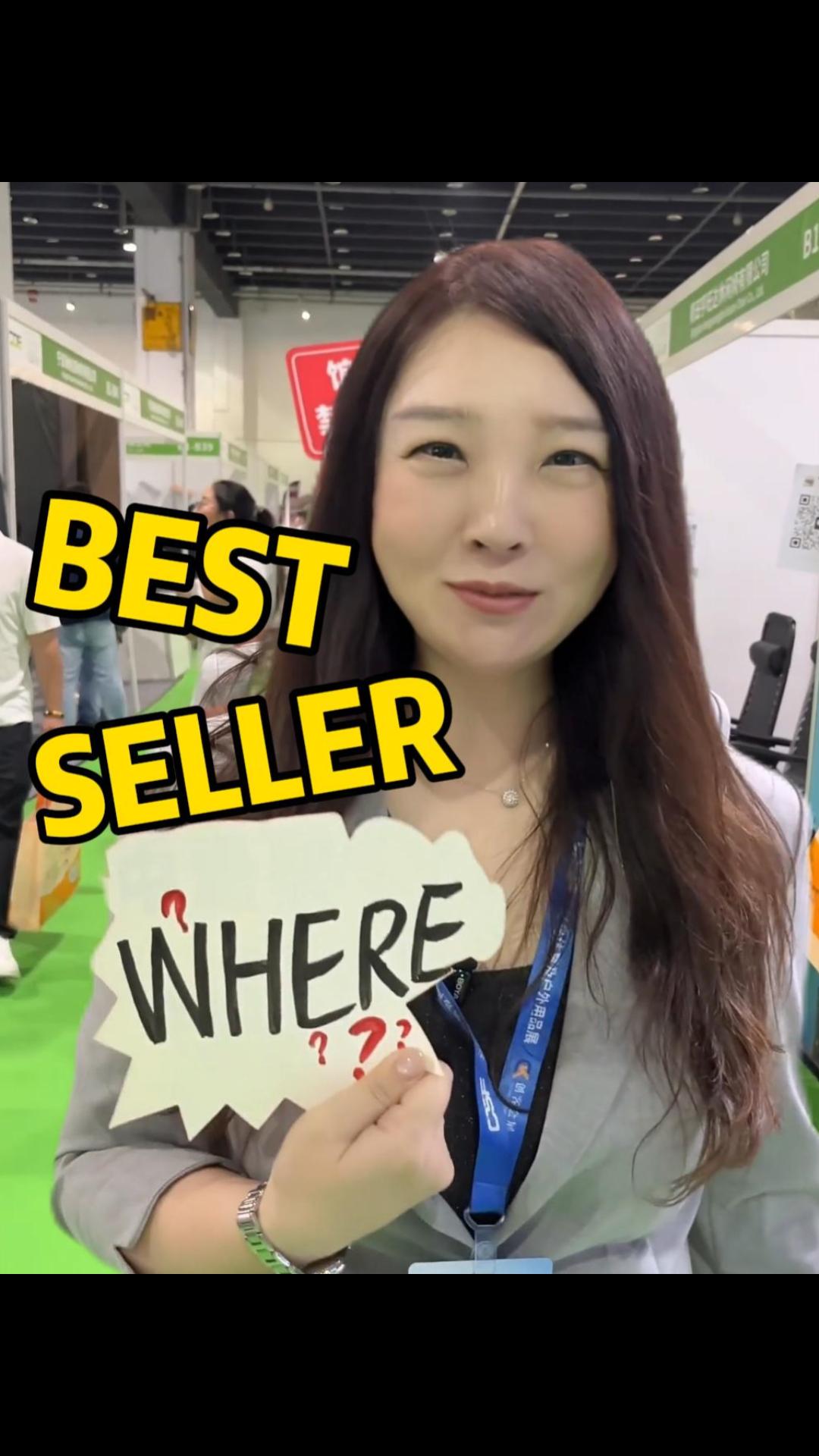
Supplier Says “Best Seller”? Ask: Best Seller Where?
Walk through a trade show in China and you may hear the same phrases again and again:
“Best seller.”
“Hot product.”
“Very popular.”
“Everyone is buying this.”
These descriptions sound useful.
But for professional buyers, they should be the beginning of the conversation—not the end.
The next question should be:
Best seller where?
A product may sell well in Europe but perform very differently in the United States.
It may be popular with wholesalers but unsuitable for ecommerce.
It may sell strongly during one season but move slowly for the rest of the year.
That is why buyers should never treat the words “best seller” as proof that a product will work in their own market.
What Does “Best Seller” Actually Mean?
There is no single universal definition.
When a supplier says a product is a best seller, they may mean:
Many buyers asked about it recently
The factory produced a large quantity
One important customer ordered it
It sells well in a specific country
It is popular at trade shows
It is currently trending
It is one of the supplier's most frequently reordered products
The supplier simply wants to promote it
These situations are very different.
That is why the phrase itself tells buyers very little without additional context.
The Most Important Question: Best Seller Where?
The first follow-up question should be:
Which market is buying it?
For example, ask:
United States?
Europe?
Japan?
Middle East?
Southeast Asia?
Latin America?
The answer matters because customer preferences, price points, regulations, retail structures, climate, product sizes, and buying habits can vary significantly between markets.
A product that performs strongly in one country may need different:
Colors
Sizes
Packaging
Materials
Features
Price positioning
before it becomes suitable for another.
Why Does the Country Matter?
Different markets evaluate the same product differently.
Consider a simple sporting product.
One market may care most about:
Low price
Bright colors
Large packaging
Another may prioritize:
Compact packaging
Minimal design
Product consistency
Specific labeling
Another market may expect:
Premium materials
Strong retail presentation
Brand customization
The physical product category may be the same.
The version that sells successfully can be very different.
That is why “this sells well overseas” is still too vague.
Buyers should ask:
Which overseas market?
Ask Which Sales Channel
Country is only the first layer.
The next question is:
Where is the product being sold?
For example:
Amazon
Independent ecommerce stores
Supermarkets
Discount stores
Specialty retailers
Sporting-goods stores
Wholesale markets
Gift shops
Social commerce
Promotional-product distributors
A product that performs well in a physical retail store may not necessarily work well online.
Why Does the Sales Channel Change the Answer?
Different sales channels create different product requirements.
Ecommerce
Online products may need:
Clear visual appeal
Easy-to-understand functions
Compact shipping size
Lower damage risk
Suitable individual packaging
Manageable fulfillment costs
Physical Retail
Retail products may need:
Strong shelf presentation
Appropriate retail packaging
Barcodes
Clear product information
Suitable display size
Wholesale
Wholesalers may care more about:
Stable supply
Competitive carton quantities
Repeat-order consistency
Product assortment
Downstream margin
Promotional Products
Promotional buyers may prioritize:
Logo customization
Large-volume pricing
Fixed event deadlines
Color matching
Printing consistency
A supplier may truthfully say:
“This is our best seller.”
But if it is mainly sold to promotional-product buyers, that information may not help an Amazon seller very much.
Ask Who Is Buying It
Another useful question is:
What type of buyer usually orders this product?
Possible answers may include:
Importers
Wholesalers
Retail chains
Amazon sellers
Promotional-product companies
Distributors
Specialty stores
This gives buyers additional context.
For example, a product repeatedly purchased by wholesalers may have strong distribution demand.
A product mainly ordered for one-off promotional campaigns may behave very differently.
Understanding the buyer type helps you understand the meaning behind the sales claim.
Ask Whether Buyers Are Reordering
This is one of the most useful questions.
Ask:
Do customers reorder it?
A product can receive many first orders because it looks interesting.
That does not automatically mean it performs well after entering the market.
Repeat orders can provide a different type of signal.
If buyers repeatedly reorder the same product, it may suggest that the product continues to have commercial demand.
However, even repeat orders should still be evaluated in context.
Ask:
Which market is reordering?
What quantity?
How frequently?
Which version?
Is demand seasonal?
The purpose is not to obtain confidential customer information.
The purpose is to understand the general sales pattern.
“Many Orders” and “One Large Order” Are Not the Same
Imagine two suppliers.
Supplier A
Sold 100,000 units to one large customer.
Supplier B
Sold 5,000 units each to 20 different customers.
Both suppliers might describe the product as a best seller.
But these sales patterns tell different stories.
Supplier A may have one strong account.
Supplier B may have broader market adoption.
Neither is automatically better.
But buyers should understand what kind of sales history supports the supplier's claim.
Ask How Long It Has Been Selling
A product can be:
Hot this month
Popular this season
Stable for three years
Those are very different product opportunities.
Ask:
How long has this product been selling well?
This helps separate:
Short-Term Trend Products
These may experience rapid demand but also rapid decline.
Seasonal Products
These may sell strongly during specific periods.
Evergreen Products
These may have more stable demand throughout the year.
The correct choice depends on the buyer's strategy.
A business built around trends may accept short product cycles.
A wholesaler may prefer a product that can be reordered consistently for years.
Ask Whether the Product Is Seasonal
Some products may genuinely be best sellers—but only for a short period.
Examples may include:
Summer outdoor products
Winter accessories
Holiday decorations
Back-to-school products
Sporting-event merchandise
Seasonal travel products
The sourcing question should then become:
Can I receive and sell it before the demand window closes?
Buyers need to consider:
Production lead time
Packaging
International shipping
Customs
Warehouse receiving
Listing preparation
Marketing
A hot seasonal product arriving after the peak selling period can quickly become excess inventory.
Ask Which Version Is Actually Selling
One product may have ten variations.
Only two may be strong sellers.
Buyers should ask:
Which color?
Which size?
Which model?
Which packaging?
Which set combination?
Which material?
For example, a supplier may say:
“This bottle is a best seller.”
But the actual successful version could be:
750 ml
Black
Retail box
Two-piece set
while the buyer is considering:
500 ml
Pink
Polybag
Single unit
Technically, it is the same product family.
Commercially, it may be a completely different offer.
Does “Best Seller” Mean Best Product?
No.
Sales volume and product quality are not the same thing.
A product may sell well because:
It is inexpensive
It is currently trending
A large retailer promoted it
It has strong distribution
It is available quickly
It fits a certain price segment
Another product may have better:
Materials
Workmanship
Packaging
Functions
but sell in smaller quantities.
Buyers should therefore separate two questions:
Does it sell?
and
Does the product meet my quality requirements?
Both matter.
Does “Best Seller” Mean Best Supplier?
No.
This is another common sourcing mistake.
A supplier may have a popular product but still not be the best partner for your business.
Buyers should separately evaluate:
Communication
MOQ
Product consistency
Lead time
Packaging capability
Customization
Order flexibility
Supplier reliability
Repeat-order capability
A strong product cannot automatically compensate for a weak supplier.
Product evaluation and supplier evaluation are connected—but they are not the same decision.
Should Buyers Ignore Supplier Best-Seller Recommendations?
No.
Supplier recommendations can be useful.
Factories and wholesalers often have valuable visibility into:
Which products receive frequent inquiries
Which items are being reordered
Which colors are moving
Which categories are growing
What international buyers are currently asking for
This information can provide useful sourcing clues.
The mistake is treating the recommendation as a final purchasing decision.
A better approach is:
Supplier recommendation → Ask questions → Verify fit → Compare options → Test the market
What Should You Ask After Hearing “Best Seller”?
Here is a practical question list.
Market
Which countries buy this product most?
Is demand concentrated in one market?
Sales Channel
Is it mainly sold online, offline, or wholesale?
What type of buyers usually order it?
Product Version
Which color sells most?
Which size?
Which model?
Which packaging?
Order Pattern
Is it mainly first orders or repeat orders?
What quantities do buyers normally purchase?
How frequently is it reordered?
Timing
Is it seasonal?
How long has it been selling?
Is demand increasing or declining?
Supply
Is it ready stock or made to order?
What is the MOQ?
What is the lead time?
Can supply remain stable if the buyer scales?
These questions turn a vague marketing claim into useful sourcing information.
How Can Buyers Verify a “Best Seller”?
There may not always be perfect proof.
Suppliers may not be able to share confidential customer data.
That is reasonable.
Instead of demanding customer names or private sales records, buyers can look for supporting signals.
These may include:
Repeat production
Stable inventory
Multiple variations
Packaging developed for specific markets
Consistent reorder patterns
Supplier experience with the destination market
Availability of mature product specifications
None of these guarantee sales.
They simply add context.
Can Online Market Research Help?
Yes.
Supplier information should be combined with market information.
Buyers can research:
Similar products already being sold
Selling prices
Customer reviews
Common product complaints
Available colors and sizes
Competitor positioning
Packaging
Product differentiation
The goal is not to copy competitors.
It is to understand whether the supplier's product fits the actual market environment.
Look at Customer Complaints, Not Only Sales
One useful product-selection technique is studying what customers dislike about existing versions.
For example, reviews may repeatedly mention:
Product is too small
Material feels weak
Difficult to assemble
Packaging arrives damaged
Color differs from photos
Components are missing
These complaints can guide sourcing decisions.
Instead of asking only:
“What sells?”
buyers can also ask:
“What can be improved?”
That creates opportunities to source a better version rather than simply following the same product.
Compare Several Suppliers
If three suppliers all say the same category is selling well, that becomes more interesting.
But buyers should still compare:
Product specifications
Price
MOQ
Packaging
Lead time
Market information
Supplier capability
One supplier's “best seller” may be different from another supplier's.
Comparing several sources helps buyers understand whether the opportunity is broader or limited to one supplier.
Can Trade Shows Help With This?
Yes.
Trade shows are useful because buyers or sourcing teams can ask several suppliers similar questions in a short period.
For example:
Supplier A:
“This is our best seller.”
Ask:
“Where?”
Then visit Supplier B:
“What is selling most for your US customers?”
Then Supplier C:
“Which items receive repeat orders from European buyers?”
Patterns may begin to emerge.
A trade show should not only be used to collect product photos.
It can also be used to collect market and supplier intelligence.
Why Is a Local Sourcing Team Useful at Trade Shows?
A sourcing team can move beyond:
“This looks interesting.”
and ask more practical questions.
For each potential product, the team can record:
Supplier
Product
Main export markets
MOQ
Price
Lead time
Popular variations
Packaging
Sample availability
Supplier comments
The buyer can then compare shortlisted products instead of receiving hundreds of unrelated exhibition photos.
What About a Product That Is Not a Best Seller?
It may still be a good opportunity.
Sometimes a product is not a supplier's biggest seller because:
It is new
The supplier has not promoted it
It targets a smaller niche
Buyers have not discovered it yet
It fits a different market
Being less popular does not automatically make it a bad product.
Likewise, being popular does not automatically make it a good product for you.
The relevant question is:
Does it fit your business?
What Should Small Buyers Do?
Small businesses generally have less room for inventory mistakes.
Instead of ordering a large quantity simply because a supplier says the product is hot, consider:
Confirming the target market.
Checking the actual sales channel.
Selecting relevant variations.
Starting with a manageable quantity when possible.
Observing real customer response.
Increasing the repeat order based on sales data.
Supplier information can help choose what to test.
Your own sales data should determine what to scale.
What Should Wholesalers Do?
Wholesalers may place larger orders, so additional questions become important.
Ask:
Is supply stable?
Can the supplier maintain the same standard?
Can the product be reordered?
Are prices stable enough for downstream customers?
Are multiple colors available?
Does packaging work for distribution?
Can production scale?
A product that sells quickly once but cannot be supplied consistently may be difficult for wholesale distribution.
What Should Ecommerce Sellers Do?
Ecommerce sellers should combine supplier recommendations with channel-specific evaluation.
Consider:
Product dimensions
Shipping cost
Fulfillment cost
Packaging
Competition
Customer reviews
Return risk
Selling price
Product differentiation
A product can be a factory best seller and still have poor ecommerce economics.
Build a Simple Product Evaluation Sheet
Instead of writing “BEST SELLER” beside a product, record more specific information.
For example:
| Question | Product A |
|---|---|
| Supplier says best seller? | Yes |
| Main market | Europe |
| Main buyer type | Wholesalers |
| Main channel | Retail |
| Popular color | Black |
| Popular size | Large |
| Repeat orders | Supplier reports yes |
| Seasonal? | Low seasonality |
| MOQ | 300 PCS |
| Lead time | 25 days |
| Suitable for my market? | Needs evaluation |
Now the phrase “best seller” becomes one input among several.
That is much more useful for purchasing decisions.
A Better Product-Sourcing Process
Instead of:
Supplier says best seller → Order
use:
Supplier says best seller
↓
Ask where
↓
Ask who buys it
↓
Ask which channel
↓
Ask which version
↓
Check your own market
↓
Compare suppliers
↓
Sample or test order
↓
Scale based on real sales
This is a much stronger sourcing process.
What Information Should You Send a Sourcing Agent?
If you want help finding products that fit your market, provide more than:
“Find me your best sellers.”
Instead, send:
Target country
Sales channel
Customer type
Product category
Target purchase price
Expected selling price
Test quantity
Packaging preferences
Important product requirements
For example:
“I sell outdoor products through independent retailers in the United States. I want products around $5–$10 wholesale, initial quantity around 300 pieces, and I prefer products that have repeat-order potential rather than very short trends.”
That gives the sourcing team a much better sourcing direction than:
“Send me your hottest products.”
How Can a Sourcing Company Help?
A sourcing company can collect supplier information and filter product recommendations according to the buyer's market.
Depending on the project, this may include:
Visiting suppliers or trade shows
Asking about main export markets
Comparing product variations
Checking MOQ
Comparing suppliers
Reviewing samples
Evaluating packaging
Checking shipment volume
Confirming supply conditions
Organizing test orders
Inspecting finished products
Consolidating shipments
The objective is not to guarantee which product will become a best seller.
No sourcing company can reliably guarantee market performance.
The objective is to help buyers make product decisions using more relevant information.
Conclusion
When a supplier says:
“This is our best seller.”
Do not stop there.
Ask:
“Best seller where?”
Then continue:
Which country?
Which sales channel?
Which type of buyer?
Which version?
Is it reordered?
Is it seasonal?
Does it fit my market?
“Best seller” can be a useful clue.
It should never be the entire sourcing strategy.
A product does not need to be popular everywhere.
It needs to make sense for your customer, your channel, and your market.
About Youshow
Youshow is a Yiwu-based sourcing company helping global buyers source and manage products from China.
Our services include:
Product sourcing
Trade-show and Yiwu market sourcing
Supplier comparison and evaluation
Product-option comparison
Sample collection
Small-quantity and mixed-product sourcing
Finished-product quality inspection
OEM and ODM customization
Order consolidation
Export certification support
Worldwide shipping coordination
We help importers, wholesalers, retailers, Amazon sellers, and ecommerce businesses simplify procurement and reduce sourcing risks.
When suppliers recommend a “best seller,” our sourcing process looks beyond the label. We can help buyers compare where the product is being sold, available variations, supplier conditions, MOQ, packaging, samples, and whether the product appears suitable for the buyer's intended market and sales channel.
Because the better question is not simply:
“Is it a best seller?”
It is:
“Is it the right product for my market?”

