
Can a Sourcing Agent Find Products in China Within Your Target Price?
“I need outdoor products under $2.”
For a sourcing agent, this is already much more useful than saying:
“Show me some outdoor products.”
A clear product category plus a target purchasing price gives the sourcing process a direction.
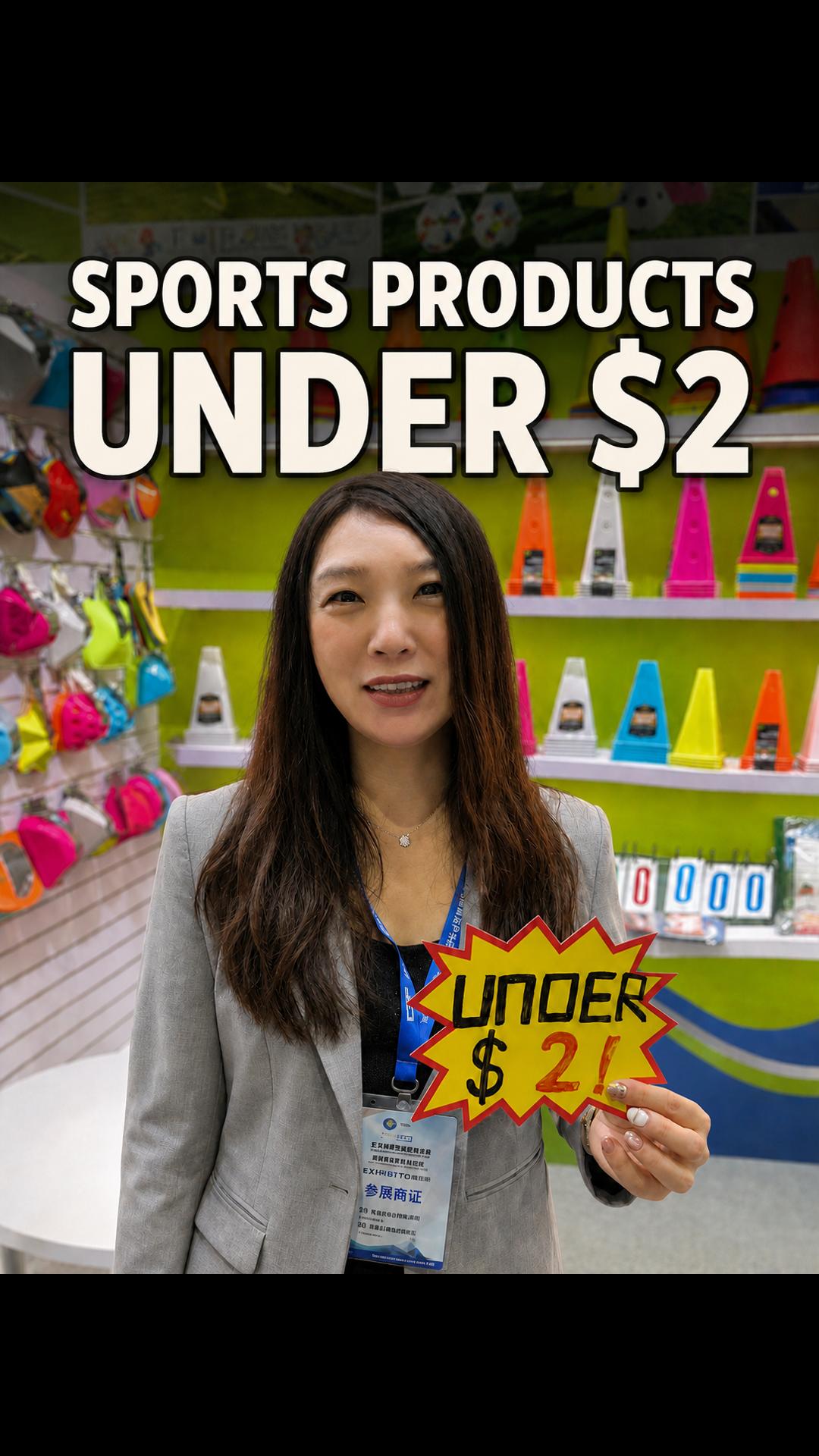
At a trade show in China, we used exactly this type of sourcing brief:
Category: sports and outdoor products
Target price: under $2
Then we searched the booths, checked different products, asked suppliers for prices, and compared which options fit the budget.
The result?
Several different product types could potentially fit that price range at the event.
But finding products below a target price is only the first step.
The more important sourcing question is:
Can we find a product that meets the target price and still fits the buyer's quality, quantity, packaging, market, and shipping requirements?
That is where professional product sourcing begins.
What Is a Target Price in China Sourcing?
A target price is the approximate purchasing cost a buyer wants to achieve for a product.
For example:
Kitchen products under $3
Pet accessories around $2
Promotional items below $1
Outdoor products under $2
Storage products between $4 and $6
A target price helps the sourcing team narrow the search.
Instead of reviewing hundreds of products without direction, the team can focus on products that have a realistic chance of fitting the buyer's business model.
However, the target price needs to be defined carefully.
What Does “Under $2” Actually Mean?
This is one of the first questions buyers should clarify.
Does $2 mean:
Factory Product Price?
The product itself costs less than $2 before other expenses.
Product + Packaging?
The buyer wants the product and standard packaging together below $2.
Customized Product?
The $2 needs to include:
Product
Logo
Label
Packaging
Landed Cost?
The buyer means the complete cost after freight and import-related expenses.
These are completely different targets.
If a buyer simply says:
“I need this below $2,”
the sourcing agent should first determine what that $2 is supposed to include.
Target Product Price Is Not the Same as Landed Cost
Suppose you find a product for:
$1.60 per unit
That does not automatically mean the final cost is $1.60.
Depending on the project, additional costs may include:
Packaging
Logo printing
Labels
China-side transportation
Product inspection
Consolidation
International freight
Duties and taxes
Destination handling
Fulfillment
A product that meets the target factory price may still be too expensive after shipping.
That is why buyers should distinguish between:
Target purchase price
and
Target landed cost.
Why Is Target Price Useful?
A realistic target price helps filter products quickly.
Imagine searching an exhibition with hundreds of suppliers.
Without a budget, the sourcing team might find:
$0.50 products
$2 products
$8 products
$20 products
They may all belong to the same general category.
But only a small portion may fit the buyer's business.
If the buyer says:
“I need outdoor accessories below approximately $2 for US retail.”
the sourcing team can immediately focus on more relevant booths and products.
This saves time for both the buyer and the supplier.
Category + Target Price Is a Better Sourcing Brief
Compare these two inquiries.
Inquiry A
“Find me outdoor products.”
This is extremely broad.
Inquiry B
“Find me outdoor or sports accessories around $2 or below for the US market. Initial quantity around 300–500 pieces per item.”
Now the sourcing team knows:
Product category
Budget
Market
Approximate quantity
That creates a much more efficient product search.
What Other Information Should You Provide?
Category and target price are a good start.
But adding several more details can make the search much more accurate.
Target Market
For example:
United States
Japan
Europe
Middle East
Different markets may prefer different:
Designs
Sizes
Packaging
Quality levels
Price points
Sales Channel
Will the product be sold through:
Ecommerce
Amazon
Retail stores
Wholesale
Promotional distribution
This can affect product and packaging selection.
Expected Quantity
A $2 quotation at 5,000 pieces may not be available at 100 pieces.
Quantity should therefore be part of the sourcing request.
Packaging Requirements
Does the buyer need:
Bulk packaging
Polybag
Retail box
Hanging card
Custom packaging
Packaging can significantly affect cost.
Customization
Does the buyer need:
Logo
Custom color
Barcode
Label
Custom box
These requirements may change both price and MOQ.
Why Does Quantity Affect the Price?
Supplier quotations are usually connected to quantity.
For example:
100 PCS
$2.20 each
500 PCS
$1.95 each
2,000 PCS
$1.70 each
These numbers are only illustrative, but the principle is common.
A buyer asking:
“Can you get this below $2?”
should also say:
“At what quantity?”
Otherwise, the target price has little context.
MOQ Matters as Much as Target Price
Imagine finding a product for:
$1.50 each
It appears to be comfortably below the $2 budget.
Then the supplier says:
MOQ: 5,000 PCS
For a buyer who only wants to test 200 units, this may not be a useful option.
Now another supplier offers:
$1.90 each
with:
MOQ: 200 PCS
The second product costs more per unit but may fit the buyer's current business much better.
This is why professional sourcing should evaluate:
Price + MOQ
rather than price alone.
Ready Stock Can Help Buyers Reach Smaller Quantities
For some product categories, ready-stock products can provide more flexibility.
Because the supplier has already produced the goods, buyers may be able to source:
Smaller quantities
Existing colors
Multiple models
Faster delivery
without starting a new production run.
This can be useful when a buyer wants to test products within a limited budget.
However, stock changes frequently.
Actual quantity and price need to be confirmed when the buyer is ready to order.
Why Should Buyers Avoid Searching Only for the Cheapest Product?
Suppose we find three sports products:
Product A
$1.20
Product B
$1.60
Product C
$1.95
Should the buyer automatically choose Product A?
No.
The products may differ in:
Material
Size
Weight
Durability
Function
Packaging
MOQ
Supplier capability
The target price should act as a filter.
It should not replace product evaluation.
A Target Price Is a Ceiling, Not a Quality Standard
This is an important distinction.
If the buyer says:
“My maximum buying price is $2.”
that tells us the budget.
It does not tell us what quality level is required.
The sourcing team still needs to understand:
How will the product be used?
How long should it last?
What will customers expect?
What selling price is planned?
A product can be under budget and still be wrong for the buyer.
Example: Promotional Use vs. Retail Use
Imagine two customers both want sports accessories under $2.
Buyer A
Needs a product for a short promotional campaign.
Priority:
Low cost
Large quantity
Simple logo
Buyer B
Will sell the product in a retail store.
Priority:
Better appearance
Repeated use
Retail packaging
Both buyers have the same $2 target.
But they may need completely different products.
That is why the sourcing brief needs more than a number.
Should a Sourcing Agent Negotiate Every Product Down to the Target Price?
Not necessarily.
Sometimes the supplier's product simply cannot reasonably meet the requested price.
For example, the target may require:
Thinner materials
Simpler packaging
Higher quantity
Removal of customization
A different specification
If reaching the target would make the product unsuitable, a sourcing agent should explain the tradeoff rather than blindly push the supplier lower.
The better question is:
What can be changed without damaging the buyer's real requirements?
What Can Be Adjusted to Meet a Target Price?
Depending on the product, possible adjustments may include:
Quantity
A larger order may produce a better unit price.
Packaging
Switching from a retail box to simpler packaging may reduce cost.
Customization
Using a standard color rather than a custom color may help.
Product Specification
A simpler version may fit the budget.
Product Combination
A buyer may select a different model with similar functionality.
Supplier
Another supplier may have a more suitable production structure.
The goal is not simply to force one product to hit the target.
Sometimes the better solution is finding another product.
Why Are Trade Shows Useful for Target-Price Sourcing?
Trade shows allow sourcing teams to compare many products quickly.
At one exhibition, we can ask several suppliers:
What is the price?
What quantity does that price require?
Is stock available?
What is the MOQ?
Are there similar models?
What packaging is included?
This makes it possible to compare multiple options within the same category.
For a request such as:
“Outdoor products under $2,”
the sourcing team can quickly eliminate products outside the budget and focus on the most relevant options.
But Exhibition Prices Are Not Final Quotes
This is important.
A price discussed quickly at a trade-show booth may depend on assumptions.
The final quotation can change based on:
Quantity
Specification
Packaging
Logo
Color
Delivery time
After the exhibition, the sourcing team should reconfirm the quotation based on the buyer's real requirements.
A booth price is useful for initial screening.
It should not automatically be treated as the final order price.
How Should Buyers Compare Products Within the Same Budget?
Suppose three options all fit below the target price.
Now compare them using a simple table.
| Factor | Option A | Option B | Option C |
|---|---|---|---|
| Price | ✓ | ✓ | ✓ |
| MOQ | |||
| Material | |||
| Size | |||
| Packaging | |||
| Lead time | |||
| Stock | |||
| Customization | |||
| Supplier |
The buyer can then choose based on the overall offer rather than one number.
Ask for More Than One Option
If the budget allows, it is often useful to ask the sourcing agent:
“Give me 3–5 options within this price range.”
Why?
Because one option does not tell you whether the market has:
Better specifications
Lower MOQ
Better packaging
More flexible stock
Stronger supplier options
Comparison creates context.
What If Nothing Fits the Target Price?
This is also useful information.
The sourcing agent should not invent a product or quote simply because the buyer wants a particular number.
If the realistic market price is above the target, the buyer has several options:
Increase the budget.
Adjust the product specification.
Simplify packaging.
Increase quantity.
Choose a related product.
Remove non-essential customization.
Sometimes the correct sourcing answer is:
“This target is not realistic for this specification.”
That is better than promising a price that cannot be delivered.
How Does Target Price Help Product Selection?
Price can also guide the type of products considered.
For example, if the buyer's retail price is relatively low, a sourcing agent may prioritize products that are:
Compact
Lightweight
Simple to manufacture
Easy to package
Easy to consolidate
A cheap factory price is less useful if the product is extremely bulky and expensive to ship.
Product selection should consider the complete economics.
Think Backward From the Selling Price
A useful sourcing approach starts with the final market.
For example:
Expected retail price
↓
Marketplace / retailer margin
↓
Fulfillment and logistics
↓
Import costs
↓
Target landed cost
↓
Target product cost
Now the buyer's target purchasing price has a business reason behind it.
This is stronger than choosing an arbitrary number such as:
“I only want products under $2.”
Should Small Buyers Give a Target Price?
Yes, when they have one.
Some buyers worry that revealing their budget will make suppliers quote exactly at the maximum.
That is why sourcing agents can still compare multiple suppliers.
But knowing the realistic budget helps eliminate irrelevant products.
You can provide a range rather than one fixed number.
For example:
Target purchase price: $1.50–$2.00
This gives the sourcing team room to compare options.
What If You Don't Know the Target Price?
That is also fine.
You can ask the sourcing agent to first collect market quotations.
For example:
“I want this type of pickleball accessory. Please compare several available quality levels and tell me the typical price range for 500 pieces.”
Then you can establish a realistic budget.
Target price can come before sourcing—or after initial market research.
How Can a Sourcing Company Help?
A sourcing company can search based on both product requirements and commercial constraints.
Depending on the project, support may include:
Searching markets and trade shows
Finding products within a target price range
Comparing several suppliers
Confirming MOQ
Checking stock
Comparing specifications
Collecting samples
Confirming packaging
Checking customization options
Finished-product quality inspection
Order consolidation
Worldwide shipping coordination
The goal is not simply:
“Find something cheap.”
The goal is:
“Find a workable product option within the buyer's business requirements.”
What Information Should You Send?
A useful sourcing inquiry can look like this:
Category: Outdoor / sports accessories
Target purchase price: Below $2
Quantity: 500 PCS per item
Market: United States
Sales channel: Retail / ecommerce
Customization: Logo preferred
Packaging: Simple retail packaging
Target delivery: [Date]
Now the sourcing team has clear filters.
This makes the search much more efficient than:
“Send me cheap outdoor products.”
A Better Target-Price Sourcing Process
A practical workflow looks like:
1. Define product category
↓
2. Define target market
↓
3. Set target price or range
↓
4. Define expected quantity
↓
5. Search multiple suppliers
↓
6. Compare product specifications
↓
7. Confirm MOQ and packaging
↓
8. Review samples when needed
↓
9. Calculate logistics and total cost
↓
10. Select the best-fit option
The cheapest product does not automatically win.
The product that fits the complete sourcing requirement does.
Conclusion
“Can you find outdoor products under $2?”
Yes, there may be several options.
But a professional sourcing search should continue beyond the first price tag.
Buyers should also confirm:
What does the price include?
What quantity is required?
What is the MOQ?
What quality level is it?
Is packaging included?
Is stock available?
Can it be customized?
What will it cost to ship?
The most useful sourcing brief is not:
“Find me something cheap.”
It is:
“Here is my category, target price, quantity, market, and requirements. Show me the best workable options.”
Give your sourcing team a category and a target price.
Then let the comparison begin.
About Youshow
Youshow is a Yiwu-based sourcing company helping global buyers source and manage products from China.
Our services include:
Product sourcing
Yiwu market and trade-show sourcing
Target-price product searches
Supplier comparison and evaluation
MOQ and stock confirmation
Sample collection
Small-quantity and mixed-product sourcing
Finished-product quality inspection
OEM and ODM customization
Packaging coordination
Order consolidation
Export certification support
Worldwide shipping coordination
We help importers, wholesalers, retailers, Amazon sellers, and ecommerce businesses simplify procurement and reduce sourcing risks.
Buyers can send us a product category, target price, expected quantity, destination market, and key requirements. Our team can then compare available product and supplier options that fit those constraints as closely as practical.
Prices shown at trade shows or markets can change with quantity, specifications, packaging, customization, and supplier conditions, so final quotations should always be reconfirmed before ordering.

