
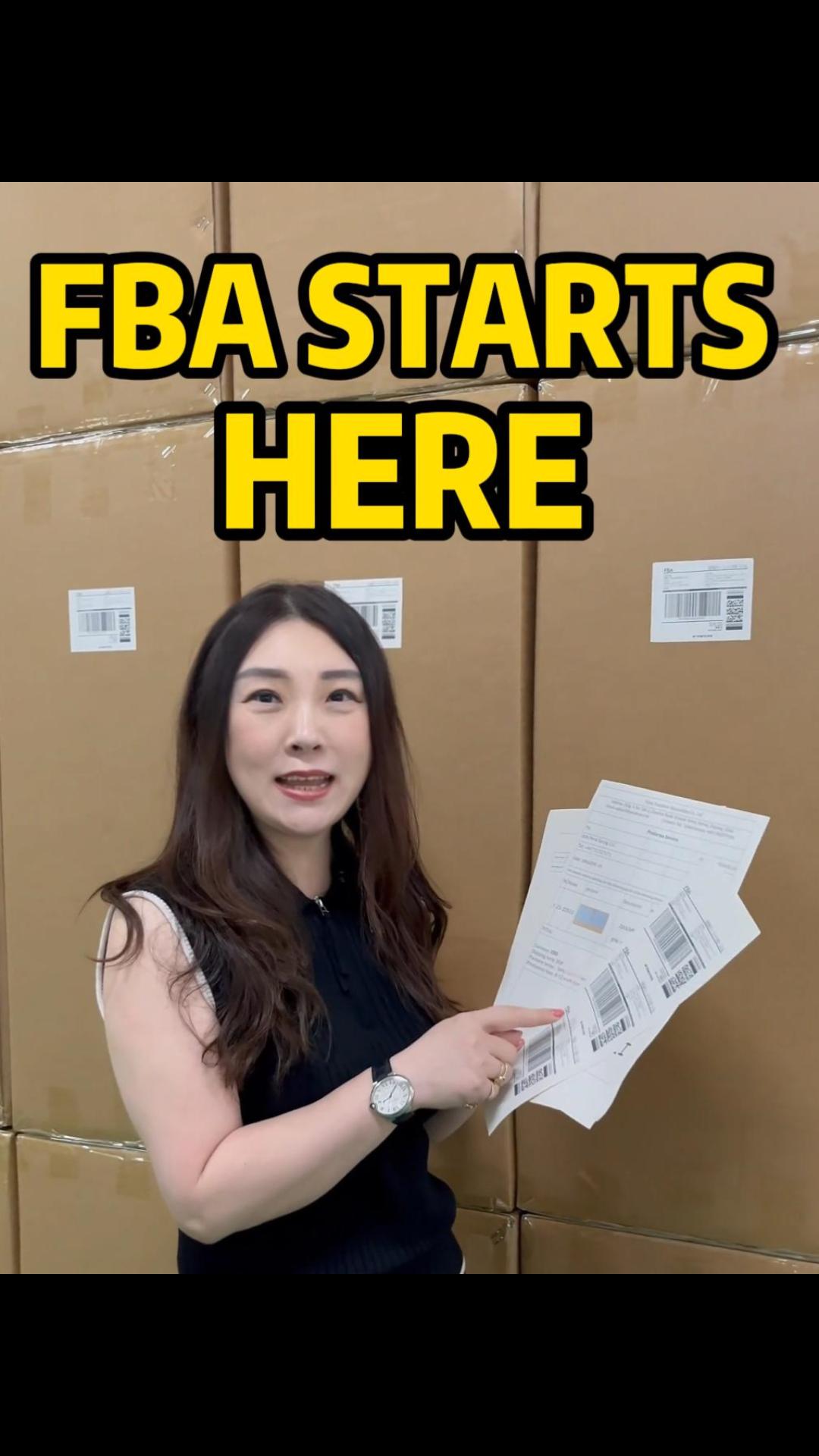
What Should Be Checked Before Shipping Products to Amazon FBA?
Sending products to Amazon FBA may look like a logistics task.
In reality, successful FBA preparation begins long before the cartons reach an Amazon fulfillment center.
Product labels, barcodes, carton quantities, packaging, shipping documents, and order details all need to match before the shipment leaves China.
A small mistake made before shipping can create delays, additional handling, relabeling, or extra costs later.
That is why FBA preparation should start at the sourcing and warehouse stage—not at Amazon.
Does FBA Preparation Start at the Amazon Warehouse?
No.
By the time products arrive at an Amazon fulfillment center, many important decisions have already been made.
Before shipment, sellers need to make sure that the products and shipment information have been prepared according to the applicable requirements for their account, product, marketplace, and shipping plan.
This may involve checking:
Product identification
Barcodes and labels
Product packaging
Carton quantities
Carton information
Shipment plan information
Packing records
Commercial documents
Shipping arrangements
The exact requirements can vary, so sellers should always confirm the latest instructions in their Amazon Seller Central account before shipping.
Why Should FBA Requirements Be Confirmed Before Production or Packing?
Waiting until the products are already packed can create unnecessary work.
For example, if a label needs to be added or changed after all cartons have been sealed, the warehouse may need to:
Reopen cartons
Remove products
Apply new labels
Recount units
Repack products
Reseal cartons
Recheck shipment information
This adds labor, time, and cost.
It is more efficient to confirm important requirements before final packing begins.
1. Confirm the Correct Product and SKU
Before preparing an FBA shipment, the sourcing team should first confirm that the physical product matches the buyer's order information.
Check:
Product model
Color
Size
Quantity
SKU
Packaging version
Customization
Accessories
This sounds basic, but similar-looking products can easily be mixed when a buyer sources multiple variations.
A correct label on the wrong product is still a problem.
2. Check Product Barcodes and Labels
Product identification is one of the most important parts of FBA preparation.
Depending on the product and the seller's current Amazon settings, different barcode requirements may apply.
Before shipping, buyers should confirm:
Which barcode should be used
Whether every unit requires a specific label
Whether the barcode is readable
Whether the label matches the correct SKU
Whether other visible barcodes need attention
Whether labels are positioned correctly
Whether the printed information is clear
The supplier or sourcing warehouse should not guess which label the buyer needs.
The seller should provide the correct label files or requirements based on the current shipment workflow.
3. Make Sure Labels Match the Products
A label may be perfectly printed but still applied to the wrong product.
This risk increases when an order contains:
Several colors
Several sizes
Similar product models
Multiple SKUs
Different bundles
Different packaging versions
Before sealing the cartons, the warehouse should cross-check the product and its corresponding label.
A useful process is:
Separate products by SKU.
Confirm the product model.
Confirm the correct label.
Apply the label.
Recheck the labeled units.
Pack the confirmed units into cartons.
Clear separation helps reduce mixing errors.
4. Check Product Packaging
Products should be prepared in packaging suitable for handling, transportation, and the applicable fulfillment requirements.
Depending on the product, the warehouse may need to check:
Individual packaging
Product protection
Loose parts
Openings
Sharp edges
Fragile components
Packaging strength
Label visibility
Barcode readability
The packaging also needs to protect the product during international transportation before it even reaches the fulfillment center.
A package designed only for retail appearance may not always be suitable for long-distance shipping.
5. Confirm the Quantity of Every SKU
Quantity errors can create problems throughout the shipment.
Before final packing, the warehouse should confirm:
Total order quantity
Quantity per SKU
Quantity per variation
Quantity per carton
Total number of cartons
This information should match the shipment records provided by the seller.
For multi-SKU shipments, keeping a clear carton packing record makes final verification easier.
6. Check Carton Count and Carton Information
The number of physical cartons should match the shipment plan.
Before dispatch, confirm:
Total cartons
Carton numbers
Units inside each carton
Carton dimensions
Gross weight
Destination information
Required box labels
Carrier-related labels when applicable
A carton should not simply be sealed and moved to the shipping area without being linked to the correct shipment information.
7. Check Box Labels Before Shipping
Shipment-level box labels are different from product-level labels.
Each shipping carton should be prepared according to the seller's current Amazon shipment workflow and carrier requirements.
Before dispatch, check that:
The correct label is on the correct carton
The label can be scanned
Important information is not covered
The label has not been damaged
Old shipping labels are not creating confusion
The number of labeled cartons matches the shipment
The warehouse should complete this check before the goods leave China.
8. Match the Packing Information
A packing record helps connect the physical shipment with the order information.
It may include:
SKU
Product description
Quantity
Carton number
Units per carton
Total cartons
Gross weight
Net weight
Carton dimensions
For shipments involving several products, this document becomes especially useful.
If a problem appears later, clear packing information makes it easier to identify which products were packed into which cartons.
9. Check the Commercial Invoice and Shipping Documents
International shipments may also require commercial and logistics documentation.
The required documents depend on:
Destination country
Shipping method
Product category
Customs requirements
Import arrangement
The information used for logistics and customs should be checked for consistency.
Common details may include:
Shipper information
Consignee information
Product description
Quantity
Declared value
Country of origin
Carton quantity
Shipment weight
Incorrect or inconsistent information can create additional questions during transportation or customs clearance.
10. Check Whether Product Information Matches Across Documents
One of the easiest ways to create shipping problems is to use different information in different places.
For example:
The product quantity in the warehouse record should not conflict with the quantity in the shipment information.
Product descriptions should also be sufficiently clear for the relevant shipping and customs process.
Before release, compare key information across:
Order records
Packing information
Commercial invoice
Shipping documents
Warehouse carton records
FBA shipment information
The goal is consistency.
11. Confirm the Final Shipping Destination
Amazon shipments may not always go where the seller initially expects.
The destination information should come from the current shipment plan rather than an old shipment or saved warehouse address.
Before shipping, confirm:
Destination
Shipment reference
Carrier arrangement
Carton count
Required labels
Pickup or delivery plan
Never reuse old shipment labels simply because the products are the same.
The current shipment should follow the current shipping instructions.
12. Coordinate the China-Side Logistics
Getting products ready is only one part of the process.
The sourcing or logistics team may also need to coordinate:
Supplier delivery to the warehouse
Consolidation
Final carton preparation
Pickup time
Freight forwarder handover
Export documentation
International transportation
Destination delivery
The exact responsibility depends on the buyer's shipping arrangement.
For door-to-door shipments, coordination between suppliers, warehouses, freight partners, and the destination side becomes especially important.
Why Does Order Consolidation Matter for FBA Sellers?
Amazon sellers often source several products from different suppliers.
If every supplier ships independently, the buyer may need to manage:
Multiple domestic deliveries
Separate inspections
Different packing standards
Multiple international shipments
Different warehouse schedules
A consolidation warehouse can receive products from several suppliers first.
The sourcing team may then:
Confirm quantities
Separate SKUs
Check finished products
Confirm labels
Review packaging
Organize cartons
Prepare a combined shipment
This creates one coordination point before the products leave China.
Should Finished Products Be Checked Before FBA Shipping?
Yes, when inspection is part of the buyer's sourcing plan.
Sending defective or incorrectly prepared products directly into a fulfillment network can make later correction more difficult.
Depending on the product and buyer requirements, finished-product checks may include:
Appearance and workmanship
Quantity
Dimensions
Basic functions
Product labels
Barcodes
Packaging
Carton information
Final pre-shipment confirmation
The purpose is to identify visible or measurable issues before international shipment.
Why Is Label Checking Different From Quality Inspection?
A product can pass a basic quality check and still have an incorrect label.
Likewise, a correctly labeled product can still have a quality problem.
These are separate checks.
Product Quality Check
Focuses on whether the physical product meets the agreed requirements.
Label and FBA Preparation Check
Focuses on whether the products and cartons are prepared according to the buyer's current fulfillment and shipment instructions.
Both may be necessary before shipment.
What Can Go Wrong If FBA Preparation Is Left Until the Last Minute?
Common problems can include:
Wrong labels
Labels applied to the wrong SKU
Missing barcodes
Incorrect carton quantities
Shipment information that does not match the physical goods
Packaging that needs to be changed
Cartons that need to be reopened
Additional relabeling or repacking
Shipment delays
Additional warehouse or logistics costs
Many of these issues are easier to solve while the goods are still in China.
Once products are already in international transit, the available solutions become more limited.
What Should Sellers Send Their China Sourcing Partner?
Before FBA preparation begins, the seller should provide the relevant current information.
This may include:
Product list
SKU information
Product label files
Quantity per SKU
Packaging requirements
Shipment plan information
Box label files when available
Destination information
Special preparation instructions
Preferred shipping method
If something changes in Seller Central after the original instructions were sent, the sourcing team should receive the updated information before dispatch.
Should a China Supplier Decide the FBA Requirements?
No.
Factories are responsible for manufacturing or supplying the products, but they should not be expected to interpret the seller's Amazon account requirements independently.
Different sellers, products, marketplaces, and shipment plans can have different requirements.
The buyer should confirm the current Amazon requirements and provide accurate instructions.
A sourcing company can then help execute and verify those instructions on the China side.
Why Is a Pre-Shipment Checklist Useful?
For repeated FBA shipments, a checklist can reduce mistakes.
A practical checklist may include:
Products
Correct SKU
Correct variation
Correct quantity
Finished-product check completed
Unit Preparation
Packaging confirmed
Product label confirmed
Barcode readable
Label matches SKU
Cartons
Correct units per carton
Correct carton count
Carton dimensions recorded
Weight recorded
Required carton labels applied
Documents
Packing information confirmed
Invoice information checked
Shipping information confirmed
Logistics
Shipment destination confirmed
Freight arrangement confirmed
Pickup scheduled
Warehouse handover confirmed
The checklist should be adapted to the specific order and current platform requirements.
Does FBA Preparation End When the Cartons Leave the Warehouse?
Not necessarily.
For international shipments, coordination may continue through:
Freight pickup
Export handling
International transportation
Customs procedures
Destination delivery
The responsibilities depend on the logistics service selected by the buyer.
Tracking the shipment and keeping documents organized can make communication easier if a problem occurs during transportation.
What Is the Main Goal of FBA Preparation?
The goal is simple:
Make sure the right products, in the right quantities, with the right preparation and shipment information, leave China correctly.
Good FBA sourcing management is not about adding unnecessary steps.
It is about preventing avoidable problems before the products are already thousands of miles away.
Conclusion
FBA does not start when products arrive at Amazon.
It starts before shipping.
Product identification, barcodes, labels, carton quantities, packaging, shipment information, documents, and logistics should all be checked while the goods are still in China.
The earlier these details are confirmed, the easier it is to correct mistakes.
For Amazon sellers sourcing from China, good FBA preparation is part of good sourcing management.
About Youshow
Youshow is a Yiwu-based sourcing company with 18 years of experience helping global buyers source products from China.
Our services include:
Product sourcing
Supplier comparison and evaluation
Sample collection
Finished-product quality inspection
Packaging and label confirmation
Order consolidation
OEM and ODM customization
Export certification support
Worldwide shipping coordination
We help importers, wholesalers, retailers, Amazon sellers, and ecommerce businesses simplify procurement and reduce sourcing risks.
For FBA-bound orders, our team can help coordinate China-side product checking, labels, packaging, carton information, consolidation, and shipment preparation according to the buyer's provided requirements and current shipping plan.
Amazon requirements can change, so sellers should always verify the latest FBA preparation and shipment instructions in their Seller Central account before dispatch.