
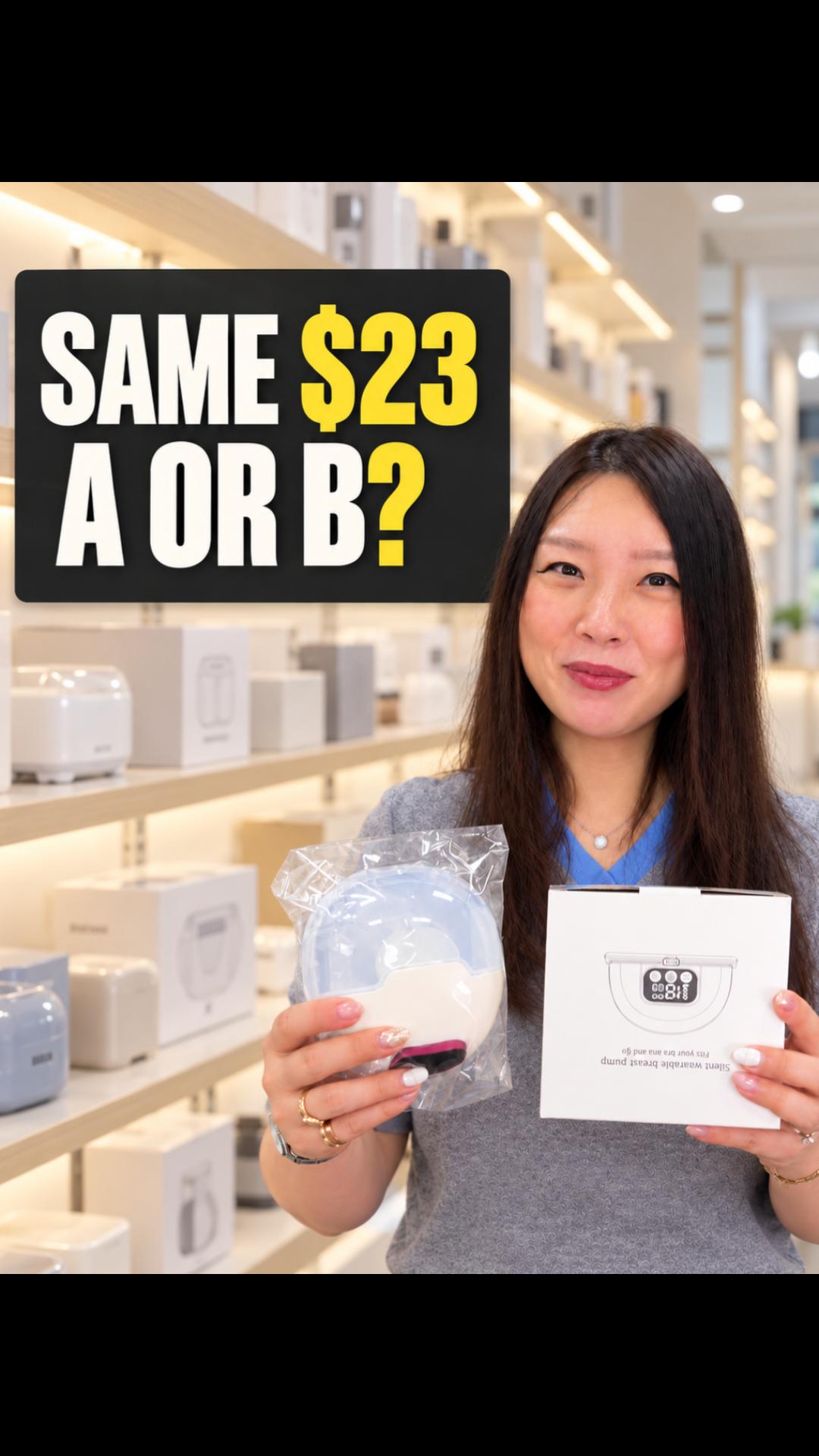
Same Price, Different Value: How to Compare China Supplier Quotations
Two suppliers.
Same product.
Same quoted price:
$23.
So the offers are equal, right?
Not necessarily.
In this example:
Option A — $23
You receive:
The product
A simple plastic bag
Option B — $23
You receive:
The product
Accessories
Retail packaging
Option B is much closer to being ready to put directly on the shelf.
Option A may still require you to source packaging, accessories, and additional preparation later.
That is why buyers should not compare supplier quotations using price alone.
Same price does not always mean same value.
Ask: What Does the Price Include?
When a supplier quotes:
$23 per unit
the next question should be:
What exactly is included in that $23?
Depending on the product, the quotation may include or exclude:
Accessories
Retail box
Instructions
Inserts
Labels
Logo
Individual packaging
Two suppliers can quote the same number while providing very different final products.
Compare the Complete Offer
Imagine:
Supplier A
Unit price: $23
Includes:
Product only
You still need:
Retail packaging
Accessories
Labels
Repacking
Supplier B
Unit price: $23
Includes:
Product + accessories + retail-ready box
The factory price is identical.
But the amount of work and money required after receiving the product is not.
That makes Supplier B potentially more valuable, even though neither supplier appears cheaper on the quotation sheet.
Why Does Retail-Ready Packaging Matter?
For retailers and ecommerce sellers, a product usually needs more than the physical item.
Before it reaches the customer, it may need:
A presentable package
Product information
Accessories
Instructions
Labels or barcodes
If these elements are not included in the original quotation, the buyer may need to arrange them separately.
That can create additional:
Cost
Supplier communication
Lead time
Warehouse work
So buyers should consider how close the supplier's offer is to the final sellable product.
Cheap Quotation vs. Complete Quotation
A low or attractive price may only cover the basic product.
This does not make the supplier's quotation wrong.
The problem appears when the buyer assumes it includes more than it actually does.
For example:
Supplier quotation: $23
Buyer assumes:
Product + packaging + accessories
Supplier means:
Product only
That misunderstanding can create unexpected costs later.
The solution is simple:
Confirm the quotation scope before ordering.
Use an “Included / Not Included” Checklist
When comparing suppliers, create a simple table.
| Item | Supplier A | Supplier B |
|---|---|---|
| Product | Included | Included |
| Accessories | No | Included |
| Retail box | No | Included |
| Instructions | Confirm | Included |
| Logo | Confirm | Confirm |
| Labels | Confirm | Confirm |
| Unit price | $23 | $23 |
Now the comparison becomes much clearer.
The buyer can see what they are actually receiving for the money.
Think About the Cost After the Factory
Suppose Supplier A saves nothing on product price but requires you to arrange:
$1 retail box
$0.50 accessories
Repacking labor
Additional domestic delivery
The real cost is no longer simply:
$23
This is why professional buyers think beyond factory unit price.
A better question is:
How much will this product cost before it is actually ready for my customer?
Packaging Can Also Affect Lead Time
Missing packaging does not only affect cost.
It may also affect timing.
If you need to source a retail box separately, the process may include:
Design
↓
Sample
↓
Approval
↓
Printing
↓
Delivery
↓
Repacking
That can add time before the product is ready to ship.
A more complete supplier offer may reduce these extra coordination steps.
But More Included Does Not Automatically Mean Better
This is also important.
Supplier B is not automatically the best option simply because more items are included.
Buyers should still check:
Is the packaging suitable?
Are the accessories actually needed?
Does the box fit your brand?
Is the product quality correct?
Is the MOQ acceptable?
Is the lead time workable?
For example, if you plan to create your own premium packaging, Supplier B's standard retail box may have little value.
The right supplier depends on your actual business requirements.
Compare the Same Final Requirement
Before requesting quotations, define what you really need.
For example:
Product: Smart device
Accessories: Required
Retail box: Required
Instructions: English
Logo: Custom
Quantity: 500 PCS
Then ask each supplier to quote the same configuration.
This creates a much more useful comparison.
Instead of comparing:
$23 vs. $23
you are comparing:
the same final deliverable vs. the same final deliverable.
What Should Buyers Ask Suppliers?
Before choosing between quotations, ask:
What does the unit price include?
What accessories are included?
What packaging is included?
Are labels included?
Is logo printing included?
Are there additional setup costs?
What is the MOQ?
What is the lead time?
These questions can reveal differences that are invisible in the headline price.
How Can a Sourcing Agent Help?
A sourcing agent should not simply send:
Supplier A: $23
Supplier B: $23
The more useful comparison is:
Supplier A — $23
Product only
Plastic bag
Additional packaging required
Supplier B — $23
Product
Accessories
Retail box
Closer to retail-ready
Now the buyer understands the commercial difference.
The sourcing agent's role is not only to collect prices.
It is to help clarify what each price actually buys.
Conclusion
Same product.
Same $23 quotation.
But not the same offer.
One supplier gives you:
Product + plastic bag.
Another gives you:
Product + accessories + retail packaging.
So before choosing the supplier with the most attractive number, ask:
What is included?
Then consider:
Packaging
Accessories
Additional preparation
Lead time
Final sellable condition
Because the best supplier quotation is not always the one with the lowest number.
And even when the numbers are identical:
Same price ≠ same value.
About Youshow
Youshow is a Yiwu-based sourcing company helping global buyers source and manage products from China.
Our services include:
Supplier comparison
Quotation comparison
Product sourcing
Packaging confirmation
Sample collection
MOQ and lead-time confirmation
Finished-product quality inspection
OEM and ODM coordination
Order consolidation
Worldwide shipping coordination
When comparing suppliers, our team can help buyers look beyond the headline price and clarify what each offer includes before making a purchasing decision.
Because we do not just compare quotes.
We help compare what each quote actually delivers.

